Imagine this headline: "Popular Brand’s ‘Organic’ Line Found to Contain Harmful Pesticides." Or this: "Fast-Fashion Giant Linked to Factory Using Child Labor." For an apparel CEO, these aren’t just bad news stories; they are existential brand equity destroyers. In the digital age, a brand’s reputation is its most valuable asset and its most fragile. So, how do you build a defensible wall around it when your production spans continents and complex supply chains? The answer lies in a deceptively simple document: the certificate. But not just any certificate—a verifiable, chain-of-custody document that acts as your first, and often only, legal and commercial line of defense. In modern apparel, a certificate is not merely proof of compliance; it is the foundational tool for proactive brand protection.
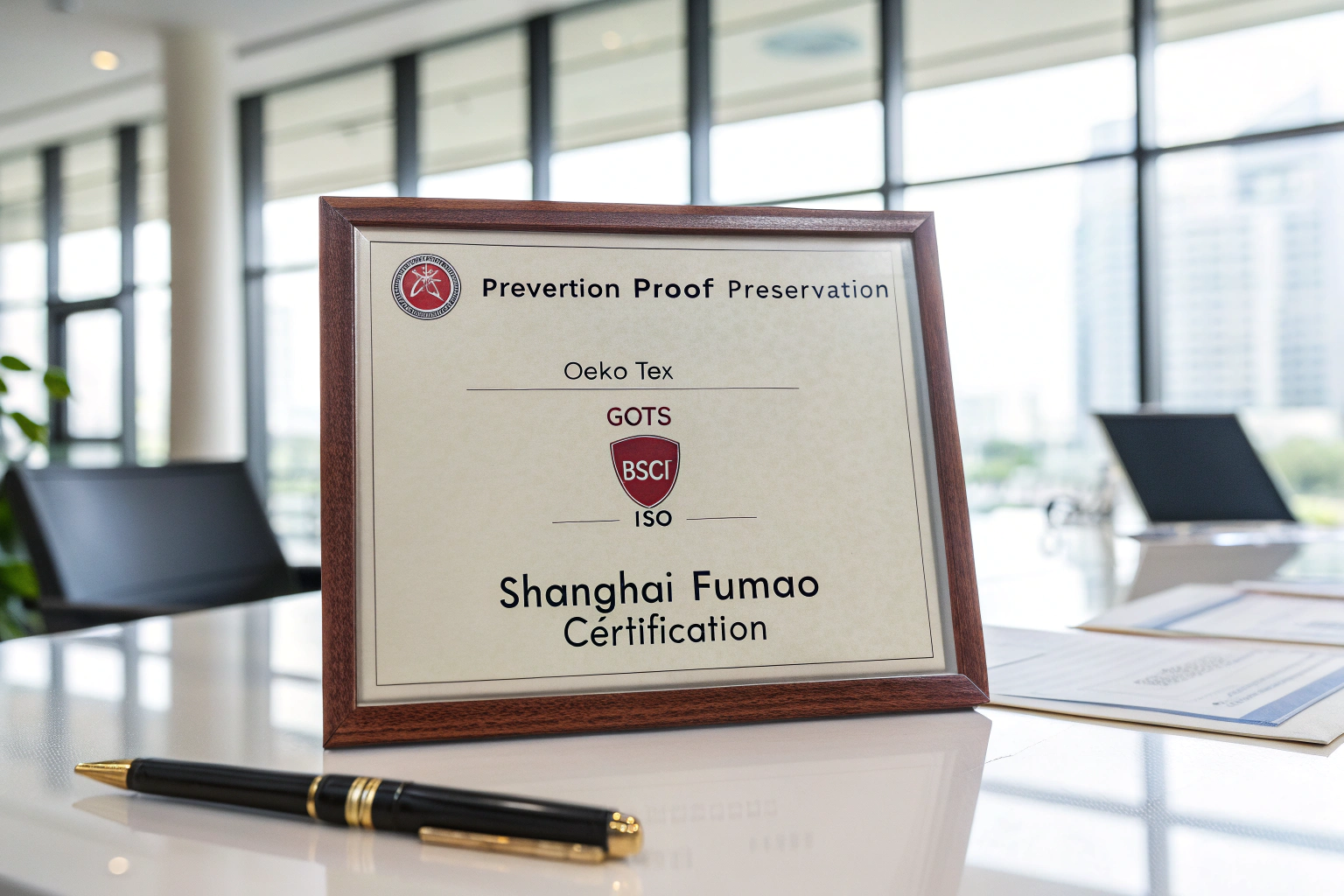
A certificate’s role in brand protection is threefold: Prevention, Proof, and Preservation. It prevents problems by ensuring you source from audited, compliant partners. It provides proof of due diligence when allegations arise. And it preserves brand value by enabling transparent storytelling that builds consumer trust. Without a system of valid certificates, your brand is naked against claims of greenwashing, ethical violations, or product safety failures. At Shanghai Fumao, we design our certification ecosystem—from OEKO-TEX® and GOTS to BSCI and ISO—not as a cost of doing business, but as the core infrastructure of your brand’s defense strategy. When you source from us, you’re not just buying fabric; you’re buying an insurance policy documented in data.
Let’s be brutally practical. When an NGO or a competitor’s lawyer comes knocking, or when a customer files a lawsuit over a skin rash, your first move isn’t to fly to the factory. It’s to open the file and produce the certificate. A valid, batch-specific OEKO-TEX® STANDARD 100 certificate is a scientific rebuttal to a product safety claim. A current GOTS Transaction Certificate with your company’s name on it is a legal defense against greenwashing accusations. In 2023, a mid-sized brand faced a social media storm accusing them of using polluting dye houses. Within hours, they published the ZDHC (Zero Discharge of Hazardous Chemicals) conformity certificates from our dyeing partners, linked to the specific products in question. The story died. The certificate didn’t just protect them; it empowered them to control the narrative. That’s brand protection in action.
How Do Certificates Prevent Catastrophic Supply Chain Scandals?
The best brand protection stops a crisis before it starts. Certificates function as your pre-qualification filter, ensuring you only partner with suppliers who have already passed independent scrutiny on critical risk factors: labor rights, environmental practices, and safety management. This is your first and most effective layer of risk mitigation. By mandating certificates like BSCI (social compliance), ISO 14001 (environmental management), and OHSAS 18001/ISO 45001 (occupational health and safety) at the supplier level, you systematically exclude high-risk actors from your supply chain.
Think of it as a security clearance for your suppliers. A factory that invests in obtaining and maintaining these certificates is signaling a professional, managed operation. They are far less likely to be the site of a fire caused by blocked exits, a toxic chemical spill, or a viral video exposing forced labor—because those are exactly the issues auditors check. This preventative role is invisible when things go right, but its absence is glaringly obvious when things go wrong. For a brand, the cost of a single scandal—in lost sales, legal fees, and eroded trust—can dwarf a decade of margins saved by using uncertified suppliers.

What Specific Risks Do Social Compliance Certificates (BSCI, SA8000) Mitigate?
These certificates are your frontline defense against ethical scandals. They verify:
- No Child or Forced Labor: Through age document checks and worker interviews.
- Fair Wages & Working Hours: Audits of payroll records and time sheets.
- Safe Working Conditions: Inspection of fire safety, building integrity, and machinery guards.
- Freedom of Association: Respect for workers’ rights to organize.
By requiring a valid BSCI report with a Grade B or better, you dramatically reduce the probability of your brand’s name appearing in a damning report by groups like the Clean Clothes Campaign. The certificate is your evidence that you conducted due diligence in supplier selection.
How Do Environmental Certificates Prevent Operational & Legal Blowback?
Environmental negligence can shutter a factory overnight, disrupting your supply, or lead to fines and import bans for non-compliant products. Certificates like:
- ZDHC MRSL Conformance: Proves the factory uses approved, safer chemicals.
- ISO 14001: Shows an active environmental management system to reduce waste and pollution.
- Wastewater Treatment Plant Certificates: From local authorities, proving compliant discharge.
These documents protect your brand from being associated with "toxic fashion" and from supply disruptions due to environmental shutdowns. They are increasingly required for compliance with laws like the EU’s Ecodesign Directive.
How Do They Provide Irrefutable Proof During a Crisis?
When a crisis hits—a product recall, a negative news report, a customs seizure—speed and credibility are everything. A certificate provides objective, third-party evidence that can be deployed immediately. It changes the conversation from "Did you know?" to "Here is the proof that we did our job." This shifts the brand from a defensive position to an authoritative one.
The protocol is critical:
- Instant Access: Certificates must be digital, searchable, and linked to specific product batches (via QR codes or lot numbers).
- Clear Communication: Your PR/legal team can issue a statement anchored to the certificate: "These allegations are false. The garments in question are made from fabric certified as safe by OEKO-TEX® (Certificate #12345, view here), produced in a BSCI-audited facility (Report #67890)."
- Regulatory Defense: Present the certificates to customs or market surveillance authorities to demonstrate compliance and expedite release of detained goods.

What is the "Chain of Custody" Certificate’s Unique Power in a Greenwashing Accusation?
A generic "we use organic cotton" claim is vulnerable. A GOTS or OCS Transaction Certificate (TC) is your legal armor. It’s a traceability document that proves the certified organic material flowed from the certified farm, through certified processing, and specifically into your purchased goods. If accused of greenwashing, you don’t just show a logo; you show the TC with your company name as the buyer, the exact quantity, and the transaction date. This is incontrovertible proof that your claim is substantiated. The Textile Exchange’s guide to claims makes this distinction clear.
How Can Safety Certificates Short-Circuit a Product Liability Lawsuit?
If a consumer alleges a skin reaction or injury from a garment, a valid OEKO-TEX® STANDARD 100 certificate (especially Class I for babies) is powerful evidence. It demonstrates that the product was tested by an accredited lab for over 100 harmful substances and found to be safe for human use according to the strictest global standards. This can form the basis for a motion to dismiss a frivolous lawsuit or be used in settlement negotiations to limit liability. It shows you exercised a high standard of care. Resources on product liability law for importers emphasize the importance of such documentation.
How Do They Enable Proactive Brand Building and Consumer Trust?
In the age of the conscious consumer, brand protection isn’t just about defense; it’s about offense. Certificates provide the verified content for a powerful brand narrative of responsibility, quality, and transparency. By actively sharing this proof, you build deeper trust, foster loyalty, and create a community of advocates. This trust is the ultimate brand protection—it gives customers a reason to believe in you and defend you.
Strategies for leveraging certificates proactively:
- QR Code Storytelling: Place a QR code on hangtags linking to a simple, visually appealing page showing the product’s key certificates (safety, organic, recycled content).
- Supply Chain "Deconstruction": Use certificate data (like factory audit scores, carbon footprint) in marketing campaigns to tell the real story behind the product.
- Annual Transparency Reports: Populate your sustainability report with specific data points pulled from your suppliers’ certificates, moving from vague promises to concrete achievements.

What is the ROI of Marketing with Certificate Transparency?
Transparency drives commercial value:
- Premium Pricing: Consumers pay more for proven sustainability and ethics.
- Lower Customer Acquisition Cost: Authentic stories are shareable and attract organic reach.
- Higher Lifetime Value: Trust builds loyalty and reduces churn.
A study by The Fashion Revolution shows that brands leading in transparency grow faster. By marketing your certificates, you turn compliance costs into marketing assets.
How Do Certificates Future-Proof Your Brand Against Regulatory Changes?
Global regulations (EU CSRD, CSDDD, US SEC climate rules) are forcing brands to disclose and verify supply chain data. A brand already operating with a library of valid certificates and traceability data is years ahead. You’re not scrambling to comply; you’re already audited and ready. This regulatory readiness is a competitive moat that protects your brand from future compliance shocks and associated costs. Analysis of the EU’s Digital Product Passport (DPP) requirement shows it will be built on the very data that certificates like ours already provide.
What is the Role of Digital, Blockchain-Secured Certificates?
The future of certification is digital and immutable. Paper and even standard PDFs can be lost or falsified. The next frontier is blockchain-secured digital certificates or digital product passports. These create a tamper-proof, permanent record of a product’s journey and credentials. For brand protection, this is revolutionary: it makes counterfeiting certificates impossible and allows consumers to verify authenticity with one scan.
How this enhances protection:
- Anti-Counterfeiting: A unique digital ID tied to a physical garment (via NFC tag or QR) proves it’s genuine and not a fake using your brand’s name.
- Immutable Audit Trail: Every transaction, test, and certification event is recorded on the blockchain, creating an unforgeable history.
- Instant Global Verification: Anyone, anywhere, can verify the certificate’s authenticity in seconds.
While we at Shanghai Fumao are already providing digital dossiers, we are piloting blockchain integration for our highest-value sustainable lines. This isn’t just a tech upgrade; it’s the ultimate evolution of brand protection—making your supply chain claims as verifiable as a cryptocurrency transaction. Articles on blockchain for fashion authentication detail this emerging standard.
Conclusion
The role of a certificate in apparel brand protection has evolved from a static compliance document to a dynamic, multi-purpose strategic tool. It is a preventative filter, a crisis-response weapon, a trust-building asset, and a future-proofing mechanism. In a world where a single supply chain misstep can wipe out millions in brand value, a robust system of valid, verifiable certificates is not an administrative task—it is the core of modern risk management and brand stewardship.
Investing in certified partners like Shanghai Fumao is investing in the integrity and longevity of your brand. It’s the decision to build your castle on solid rock, with documented proof as its foundation, rather than on the shifting sands of opacity and assumption.
Protect what you’ve built. Transform your supply chain from a vulnerability into your strongest credential. To develop a comprehensive brand protection strategy anchored in verifiable certification, contact our Business Director, Elaine, at elaine@fumaoclothing.com. Let’s build your defense together.