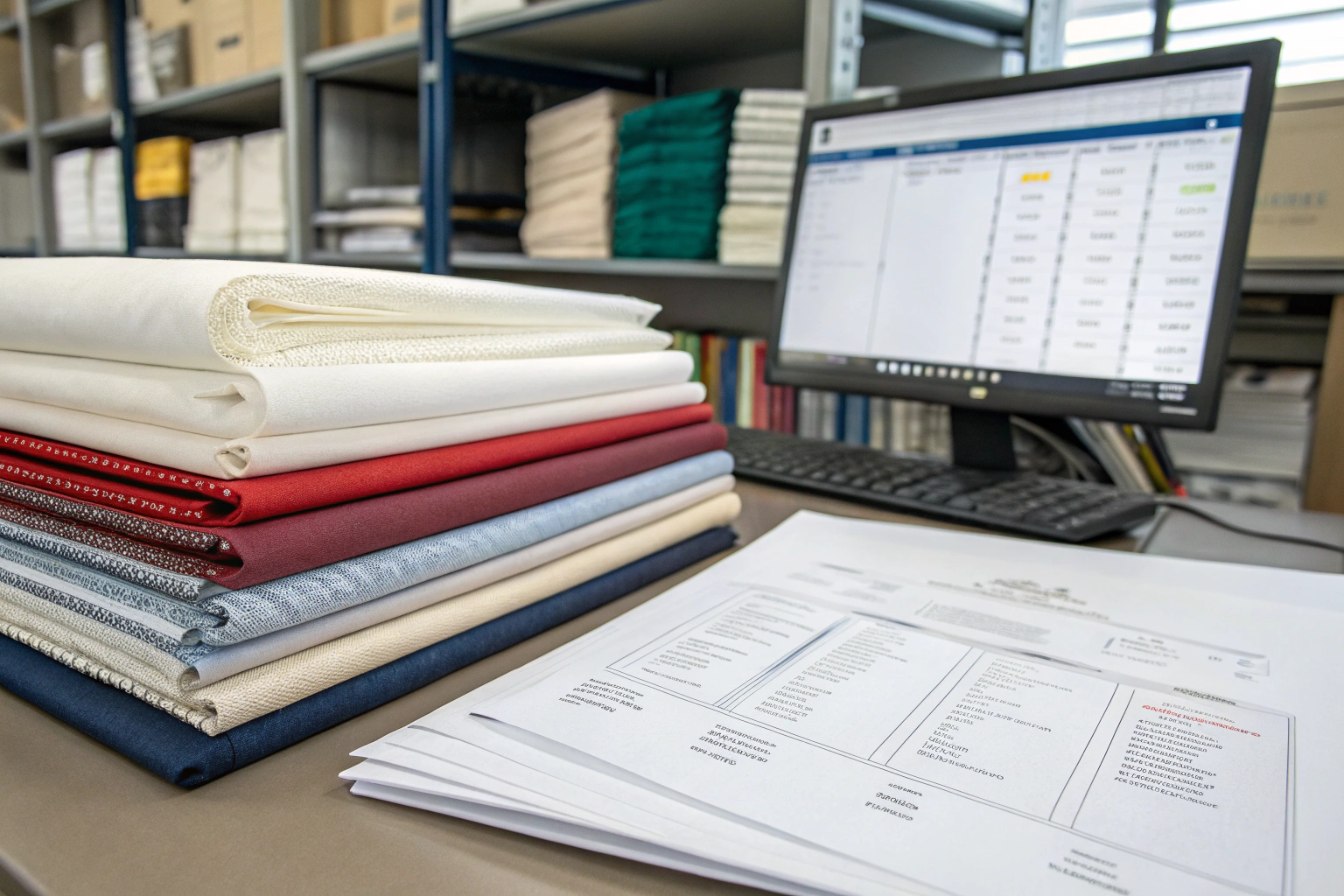
You’re about to approve a bulk fabric order. The physical swatch feels good, the color is right. But that swatch is just 10 square inches from a potential 10,000-meter roll. How do you know the entire shipment will match that tiny sample’s performance? The answer isn’t a bigger swatch; it’s in the supplier’s documentation. Relying on touch and look alone is like judging a car’s safety by its paint job. In modern sourcing, the true measure of fabric quality isn’t just in your hand—it’s in the data. Supplier documentation, when complete and verifiable, is a pre-emptive autopsy report that tells you exactly how the fabric will behave, perform, and endure before you cut a single garment. Ignoring it is an expensive gamble.
High-quality fabric suppliers don’t just sell material; they sell transparency through data. Their documentation package is a quality blueprint. A missing test report isn’t an oversight; it’s a red flag hiding a potential failure point. The right documents answer critical questions: Will this white fabric yellow after washing? Will this stretch fabric bag out at the knees? Will this printed design crack after five wears? If you can’t answer these with data from the supplier, you’re forcing your own customers to run the tests for you—through returns, complaints, and lost loyalty. At Shanghai Fumao, we treat documentation as the primary product. Our digital dossier doesn’t just accompany the fabric; it defines and guarantees its quality parameters, turning a subjective assessment into an objective, enforceable standard.
Let me give you a real-world example: A client once showed us a "high-quality" cotton twill from another mill. It had a basic composition label. We asked for the pilling and abrasion test reports. They didn’t have them. We tested it in our lab: after 5,000 Martindale cycles (a standard for trousers), it showed significant wear. Our own twill, with a nearly identical hand feel, had a test report proving 20,000+ cycles. The documentation revealed the massive quality gap that the hand feel concealed. The client avoided a season of customer complaints about worn-out pants. The documentation was the decoder ring.
What Are the Non-Negotiable Test Reports for Fabric Quality?
Think of these reports as the fabric’s medical chart. They are generated by standardized, reproducible laboratory tests (often following ISO, AATCC, or ASTM methods) that quantify performance. A supplier offering "good quality" without these reports is making an empty claim. You must request and understand these core documents for every fabric order, especially for performance or fashion-critical applications.
The essential test report suite includes:
- Fiber Composition Report (ISO 1833): This is the DNA test. It verifies the exact percentage of each fiber (e.g., "98% Cotton, 2% Elastane"). It protects you from fraudulent blending, where a supplier adds cheap polyester to cotton to cut costs.
- Colorfastness Reports: These predict how the color will hold up.
- Washing Fastness (AATCC 61 or ISO 105-C06): Simulates domestic laundering. You get a rating (1-5) for color change and staining on adjacent fabrics.
- Rubbing/Crocking Fastness (AATCC 8 or ISO 105-X12): Tests for color transfer when rubbed dry and wet. Critical for dark denims or prints.
- Light Fastness (AATCC 16 or ISO 105-B02): Measures resistance to fading from sunlight. Vital for curtains, upholstery, or outerwear.
- Dimensional Stability / Shrinkage Report (AATCC 135 or ISO 5077): Predicts how much the fabric will shrink (or stretch) after washing and drying. This data is essential for your pattern makers to pre-shrink patterns accurately.
- Physical Performance Tests (Varies by End-Use):
- For apparel (general): Pilling Resistance (ISO 12945-2), Tensile & Tear Strength (ISO 13934-1, ISO 13937-2).
- For activewear: Moisture Wicking (AATCC 195), Sweat Stain Resistance.
- For upholstery/technical use: Abrasion Resistance (Martindale, ISO 12947), Seam Slippage.

How to Read a Colorfastness Report and Set Pass/Fail Criteria?
Don’t just glance at a "Pass." Look at the numerical or letter ratings. For washing fastness, you’ll see two grades: one for Color Change (how much the original fabric fades) and one for Staining (how much it dyes other fabrics in the wash). A grade of 3-4 or higher is generally acceptable for most apparel. For a white shirt next to a red one in the wash, you’d want a staining grade of 4-5. You must set your internal quality standard (e.g., "All fabrics must achieve a minimum of 4 for washing fastness") and require the supplier’s report to meet it. The American Association of Textile Chemists and Colorists (AATCC) technical manuals define these scales.
Why is the Shrinkage Report More Important Than a "Pre-Shrunk" Claim?
A supplier saying "it’s pre-shrunk" is meaningless without data. The shrinkage report gives you percentage changes in warp (length) and weft (width). For example, "-3.2% warp, -1.5% weft." This allows for precision. Your pattern maker can digitally enlarge the pattern by exactly 3.2% in length before cutting, ensuring the final garment尺寸 are perfect after washing. Without this data, you’re guessing, leading to inconsistent sizing and customer returns. In 2023, we provided a client with a shrinkage report for a linen blend showing only 0.5% shrinkage in width but 4.5% in length. This unusual data prompted a design adjustment to avoid overly long garments after washing. The report guided smart action.
How to Verify the Authenticity of Supplier Documentation?
In an era of digital editing, a PDF test report is easy to falsify. Receiving a document is not enough; you must verify it came from a legitimate, accredited source and pertains to the specific batch you are buying. This is a three-step process: verify the lab, verify the certificate, and verify the batch link.
Step 1: Verify the Testing Laboratory. The report should be from an accredited third-party lab. Look for accreditation logos like CNAS (China), ISO/IEC 17025, UKAS (UK), or DATech (Germany). You can often check the lab’s accreditation status online. Be wary of reports from the supplier’s "in-house lab" unless that lab itself is accredited (like our CNAS lab at Shanghai Fumao).
Step 2: Verify the Certificate Details. Every legitimate test report has a unique certificate number, date of issue, and clear sample description. Cross-check the sample description on the report with the fabric you ordered. Does it match the composition, weight, and construction?
Step 3: Demand Batch-Specific Reports. This is the most critical step. A generic report from six months ago on "cotton jersey" is useless. You need a report for the specific production batch or lot number of the fabric you are purchasing. The lot number should be on the report and physically tagged on the fabric rolls. This links the data directly to your goods.

What Are the Red Flags in a Falsified or Generic Test Report?
- Blurry Logos or Text: Often a sign of a scanned copy of another company’s report.
- Vague Sample Description: "Fabric" instead of "100% Cotton Single Jersey, 180 GSM, Dyed Navy."
- No Lab Accreditation Markings.
- Issued Date is Old (e.g., over 1 year).
- The "Test Results" are all perfect 5s or 100% with no variance—real testing shows minor variations.
If you see these, request a fresh, batch-specific test from an accredited lab of your choosing, at the supplier’s cost. It’s a reasonable demand. Industry alerts on platforms like Sourcify often discuss documentation fraud.
How to Use Online Verification Tools for Major Certificates?
For broad certifications like OEKO-TEX® STANDARD 100, use the official OEKO-TEX® Certification Check online. Enter the certificate number and supplier name. The database will show the product scope, validity, and issuing institute. For ISO certificates, you can often verify them on the website of the issuing certification body (e.g., SGS, BV). This takes 5 minutes and is non-negotiable. A guide on how to verify OEKO-TEX certificates is publicly available on their site.
How Does Documentation Reveal a Supplier’s Process Quality?
The test reports are the output, but the supporting process documentation shows you the system that creates consistent quality. This includes documents like the Technical Data Sheet (TDS), Material Safety Data Sheets (MSDS), and Quality Control (QC) inspection reports. These documents reveal whether quality is an embedded, managed process or a hopeful outcome.
- Technical Data Sheet (TDS): This is the fabric’s "spec sheet" from the mill. It should list all technical parameters: fiber content, yarn count, construction (threads per inch), weight (GSM), width, finishes applied, and key performance attributes. Compare the TDS to the test reports; they should align. A missing or poorly detailed TDS suggests a lack of technical rigor.
- Material Safety Data Sheets (MSDS) for Dyes/Chemicals: If a supplier can provide the MSDS for the dyes and finishes used, it shows they source from reputable chemical companies and have control over their input materials. It’s crucial for ensuring REACH compliance and avoiding banned substances.
- In-Process QC Reports: Evidence of checks during production (e.g., shade band approval, weight checks, width monitoring) shows proactive quality management, not just final inspection.

What Should You Look for in a Comprehensive Technical Data Sheet (TDS)?
A robust TDS goes beyond basics. Look for:
- Yarn Specification: Not just "cotton," but yarn count (Ne 30/1) and type (combed, ring-spun).
- Construction Density: Threads per inch/cm in warp and weft.
- Finish Description: Specific names of functional finishes (e.g., "DWR C6," "Bio-polish finish").
- Physical Properties Table: Listing standard results for pilling, tear strength, etc., often with test method references.
When a supplier provides this level of detail, it indicates engineering pride and gives your team precise information for garment development. For performance fabrics, this is a must. Resources on how to read a fabric specification sheet can help your team.
How Do Mill Audit Reports Provide Deeper Insight?
Beyond product docs, consider the mill’s own quality management system certificates (e.g., ISO 9001) and social/compliance audit reports (e.g., BSCI, SMETA). A mill with ISO 9001 has a system for consistent processes. A good BSCI audit grade suggests stable worker management, which correlates with lower turnover and fewer production errors. These are meta-documents that speak to the overall reliability of the source. Requesting them shows you’re a serious buyer. The Sedex platform allows (with permission) viewing of supplier audit reports.
Why is a Digital, Integrated Dossier the Future of Quality Assurance?
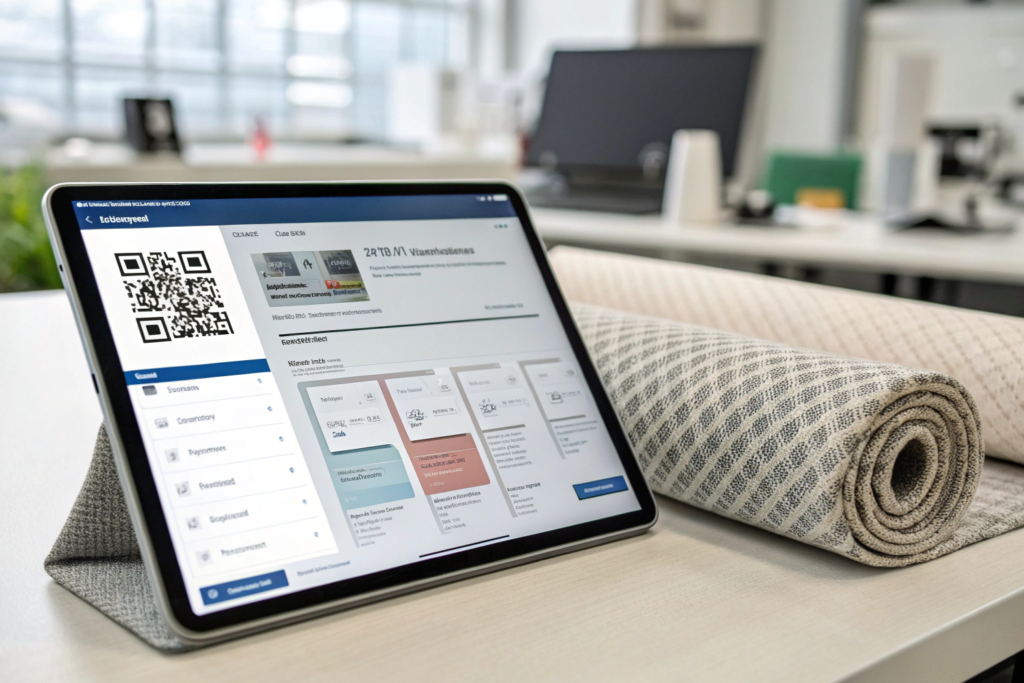
The future isn’t a folder of scattered PDFs. It’s a single, digital dossier—often accessible via a QR code on the fabric roll—that integrates all the above: TDS, test reports, certificates of compliance, and even production batch records. This isn’t just convenient; it’s transformative for quality assurance. It enables real-time verification, seamless sharing with partners, and creates an immutable quality history for the material.
At Shanghai Fumao, our Fabric Digital Passport works this way. Scanning the roll’s QR code (with secure login) pulls up a live dashboard showing:
- The batch-specific TDS.
- All accredited lab test reports (PDF downloads).
- Sustainability certificates (GOTS, GRS TCs).
- Shipment and production timeline.
This means your QC team at the garment factory can instantly verify if the incoming fabric matches the PO specs by checking the digital TDS. Your sustainability manager can pull compliance proof in seconds. This system eliminates the "he said, she said" and lost document chaos.
How Does a Digital Dossier Enable Predictive Quality Management?
With historical data from digital dossiers across multiple orders, you can start to analyze trends. Does Fabric Batch #456 from Mill A consistently have lower abrasion resistance than Batch #123? This data allows you to work proactively with the supplier on root-cause improvements (e.g., yarn sourcing, weaving parameters). It moves quality from a pass/fail inspection to a continuous improvement partnership. Platforms like Traceability software providers are built for this.
What is the Role of Blockchain in Future Documentation?
While still emerging, blockchain-secured documentation is the next step. It creates a tamper-proof, decentralized ledger of every test and transaction. Once a test report is uploaded to the blockchain, it cannot be altered. This provides ultimate proof of authenticity for luxury goods or highly regulated industries. While not yet mainstream, asking if a supplier is exploring such technologies shows you’re forward-thinking. Articles on blockchain for supply chain transparency discuss its potential.
Conclusion
Checking fabric quality through supplier documentation is a disciplined skill that separates professional sourcing from amateur guesswork. It requires demanding the right reports, verifying their authenticity, understanding the data, and leveraging digital systems for efficiency. The documents are not administrative overhead; they are the objective, scientific definition of the product you are buying.
By mastering this process, you shift power from subjective sample approval to objective data validation. You protect your brand from costly failures, empower your design and production teams with accurate information, and build partnerships with suppliers who value transparency as much as you do.
Stop judging fabric by a swatch alone. Start demanding the data that defines it. Request our "Fabric Documentation Checklist" and see a sample of our comprehensive digital dossier. To partner with a supplier for whom documentation is a guarantee, contact our Business Director, Elaine, at elaine@fumaoclothing.com.