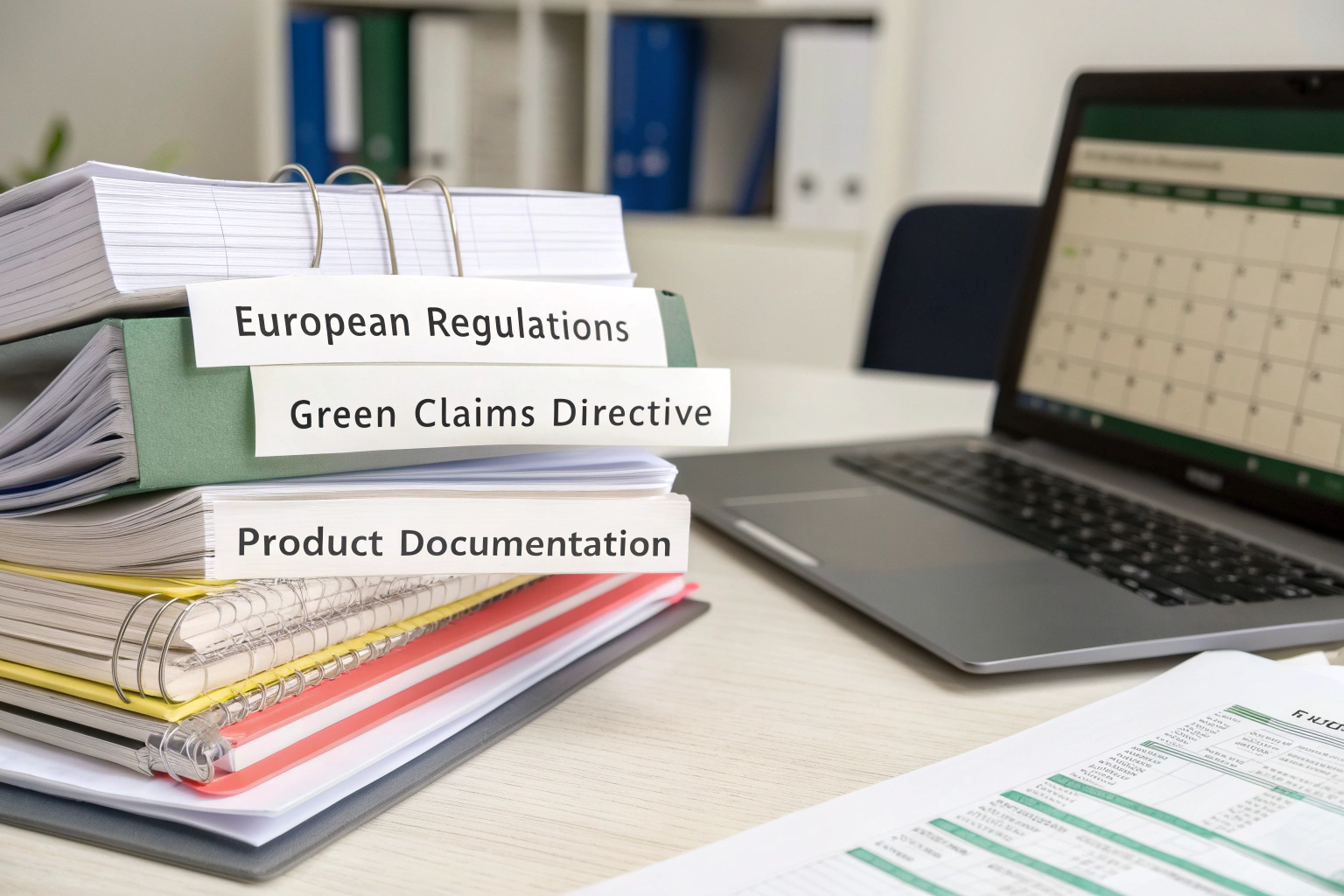
You’re a European distributor. You’ve just received a container of "eco-friendly" T-shirts from a new Asian supplier. The price was fantastic. Then, a random customs inspection in Rotterdam asks for proof of the organic cotton claim. You scramble, but the supplier only sends a blurgy PDF of a certificate that expired two years ago. Your container is held for weeks, you incur demurrage charges, and your biggest retail client cancels the order, citing non-compliance. This isn’t a bad dream; it’s a daily operational risk for distributors who don’t prioritize documentation. In the complex, highly regulated European market, full documentation isn’t a "nice-to-have" from suppliers—it’s the bedrock of your business continuity, legal compliance, and brand reputation. It’s what separates a reliable supply chain from a ticking time bomb.
For European distributors, a supplier’s ability to provide timely, accurate, and complete documentation is often more critical than a 5% lower FOB price. Why? Because the downstream costs of missing or falsified documents can be catastrophic: customs seizures, product recalls, hefty fines under regulations like the EU’s Green Claims Directive, and irreversible damage to your hard-earned B2B relationships. Full documentation provides a verifiable "story" for your product—from its origin and ethical production to its safety and environmental footprint. This story is no longer just for marketing; it’s a legal and commercial requirement to access the European market. In essence, the documentation is the product’s license to sell.
At Shanghai Fumao, we don’t view documentation as a burden. For our European distributor partners, we see it as the primary deliverable alongside the physical fabric. Our integrated digital dossier—linking Transaction Certificates, test reports, MSDS sheets, and supply chain maps—is designed specifically to meet the stringent, multi-layered demands of the EU market. It’s how we turn a potential liability for you into a seamless competitive advantage. When you can provide your retail clients with a QR code that proves a fabric’s GOTS and OEKO-TEX® compliance in seconds, you’re not just selling fabric; you’re selling trust and compliance-as-a-service.
How Does Documentation Ensure Seamless EU Customs Clearance?
The Port of Antwerp or Hamburg doesn’t care about your production deadlines. Customs authorities operate on strict, non-negotiable rules. Incomplete or incorrect documentation is the single biggest cause of clearance delays, leading to storage fees (demurrage), inspection costs, and missed sales windows. For EU importers, a supplier who provides a complete, pre-verified documentation package is worth a significant price premium because they turn a high-risk, variable process into a predictable one.
EU customs require a precise harmonization of documents. The Commercial Invoice, Packing List, Bill of Lading, and Certificates of Origin/Conformity must all tell the same, consistent story. A mismatch in weight, description, or HS code triggers a manual review. For example, if your supplier’s invoice says "100% Organic Cotton Jersey" but the attached OEKO-TEX® certificate is for "Polyester Fabric," the shipment will be flagged instantly. Full documentation means every document is cross-referenced and aligned before the container is even sealed at the factory.

What Are the Mandatory Documents for EU Textile Imports?
A supplier must provide, at a minimum:
- Commercial Invoice: With detailed description, value, Incoterms, and EU-compliant fiber labeling (e.g., "95% Organic Cotton, 5% Elastane").
- Packing List: Matching the invoice, with carton marks and numbers.
- Certificate of Origin (COO): Often Form A for Generalized System of Preferences (GSP) benefits if applicable.
- Transport Document: Bill of Lading or Air Waybill.
- Safety & Compliance Certificates: OEKO-TEX® STANDARD 100 (for consumer safety) and/or REACH SVHC Statement (declaring absence of Substances of Very High Concern) are now considered base-level requirements for reputable distributors.
- Sustainable Claim Proof: GOTS, GRS, or OCS Transaction Certificates for any organic/recycled claims.
A supplier that proactively bundles these is managing your risk. One that sends them piecemeal after request is a liability. The EU’s market surveillance regulation for products mandates that this documentation be available for 10 years after the product is placed on the market.
Why is a Pre-Shipment Document Check Critical?
The best practice we’ve established with distributors is a pre-shipment document review. Before production finishes, we send a draft package of all certificates and the commercial invoice for their review and approval. This allows their logistics team or broker to pre-clear the shipment, identifying any issues while there’s still time to correct them at the factory. In 2023, this process saved a Belgian distributor a 3-week delay when we caught that their requested HS code didn’t match the fabric’s technical construction per EU definitions. We corrected it before the B/L was issued. Resources like the EU’s Access2Markets portal provide the definitive rules, but a good supplier should know them.
How Does It Mitigate Legal Risk Under EU Green Claims Law?
As of 2026, the EU’s Empowering Consumers for the Green Transition Directive and the Green Claims Directive will impose draconian penalties for unsubstantiated environmental claims. Terms like "organic," "recycled," "biodegradable," or "low-carbon" must be backed by verifiable, third-party-certified, lifecycle-based evidence. For a distributor, this means your liability doesn’t end at the port; it extends to the point of sale. If you sell a garment labeled "made from recycled ocean plastic" based on a supplier’s verbal assurance, and it’s discovered to be false, you are liable for fines up to 4% of your annual turnover in the relevant EU states. Full, auditable documentation from your supplier is your only legal defense.
This shifts the dynamic entirely. You’re no longer just buying a product; you’re buying a compliance package. The documentation must prove a "chain of custody" for sustainable claims. For a GOTS-certified garment, this means having not just the final GOTS certificate, but the Transaction Certificates (TCs) for every step (spinning, knitting, dyeing) to prove the certified material flowed through the supply chain without contamination. A supplier that provides only a generic company certificate cannot protect you under this new law.

What Constitutes "Substantiated Evidence" for a Green Claim?
According to emerging guidelines, evidence must be:
- Third-Party Verified: Self-declarations are insufficient. Certificates from accredited bodies like Control Union (GOTS), Textile Exchange (GRS), or ECOM (OCS) are required.
- Specific to the Product/Batch: A general environmental policy of the factory is not evidence. You need a certificate or test report linked to the specific batch of material you purchased.
- Accessible for Enforcement: You must be able to provide it to market surveillance authorities within a short timeframe.
A distributor partner in Germany now requires us to provide, alongside the GOTS TC, the mill’s own GOTS certificate and the yarn supplier’s TC as part of a digital dossier. This "documentation pyramid" provides the substantiation they need. News from Euronews Green on the Green Claims Directive outlines the steep penalties for non-compliance.
How Does Documentation Protect Against "Greenwashing" Accusations?
Beyond legal fines, greenwashing accusations destroy brand equity. Retailers like Zalando or H&M are conducting their own upstream due diligence. If you cannot provide the full documentation trail instantly, they will de-list your products. Complete documentation allows you to be transparent. For instance, our Product Environmental Footprint (PEF) data sheets for key fabrics provide calculated carbon and water impact, based on verified mill data. This allows a distributor to make accurate, qualified claims (e.g., "30% lower carbon footprint than EU industry average for this category") instead of vague ones. This is the future of B2B textile sales in Europe. Analysis from Carbon Trust on PEF for textiles explains its growing importance.
How Does It Build Trust and Efficiency with Your Retail Clients?
Your retail clients (from large chains to boutique stores) are under the same regulatory and consumer pressure. They are inundated with supplier claims. When you, as a distributor, can provide a complete, digital, and instantly verifiable documentation package for every SKU you sell, you dramatically reduce their administrative burden and risk. You become a trusted filter—a guarantor of compliance. This transforms your relationship from a transactional "vendor" to a strategic "sourcing partner," justifying better margins and securing long-term shelf space.
The efficiency gain is massive. Instead of your retail client’s sustainability team spending weeks auditing your supply chain, they can simply review your pre-compiled digital dossier. Instead of their QC team conducting their own lab tests, they can trust the accredited test reports you provide. This saves them tens of thousands of euros in internal costs. We’ve enabled several of our distributor partners to create white-label compliance portals for their retail clients. The retailer logs in, selects the product, and sees all of Fumao’s underlying certificates and test reports, branded under the distributor’s name. This white-label trust is priceless.

What Does a "Retail-Ready" Documentation Package Include?
Beyond basic safety certs, progressive retailers want:
- Digital Certificates with QR Codes: Scannable at goods receipt.
- Full Supply Chain Mapping: Names and locations of spinning, weaving, dyeing units.
- Social Compliance Audit Reports: BSCI, Sedex, or SA8000 reports for the final manufacturing factory.
- Chemical Inventory (ZDHC MRSL Conformance): Proof that the dye house uses approved chemicals.
- Microfiber Shedding Test Data: Increasingly requested for synthetic fabrics.
Providing this proactively anticipates their needs and prevents last-minute frantic requests that delay payment. A case study with a Scandinavian distributor showed that providing this package reduced their average time from delivery to retailer payment by 22 days. Industry benchmarks on supplier onboarding efficiency highlight documentation completeness as the key factor.
How Does This Streamline Your Own Sales and Marketing?
When your sales team has a bulletproof documentation packet for every product, selling becomes easier. They can confidently answer any technical or ethical question. They can use the certifications as a key differentiator in pitches. The documentation moves from being a back-office requirement to a front-line sales tool. For example, having a readily available LCA (Life Cycle Assessment) summary for a fabric allows you to directly support a retailer’s own Scope 3 carbon reporting, making you an indispensable partner. Marketing materials can feature QR codes that link directly to the verification. Guides on B2B marketing with sustainability data are becoming essential for distributors.
Why is Traceability Documentation Key for Future EU Regulations (DUE DILIGENCE)?
The EU Corporate Sustainability Due Diligence Directive (CSDDD) is coming. It will legally require large companies (and eventually their downstream partners) to identify, prevent, and remedy environmental and human rights violations in their supply chains. For a distributor, this means you must conduct due diligence on your suppliers and their suppliers. The only feasible way to comply with this law across hundreds of SKUs is if your upstream suppliers provide full traceability documentation. A supplier who is opaque about their sub-suppliers becomes a compliance liability that could cost you your business with large EU corporates.
Traceability documentation provides the map. It answers: Who made the yarn? Where was it spun? Under what working conditions? What is the environmental impact of the dye house? Without this from your fabric supplier, you cannot fulfill your own legal due diligence obligations. This makes traceability a non-negotiable criterion for supplier selection. It’s no longer about "can you make this?" but "can you prove where every component came from under what conditions?"
What Does CSDDD-Ready Traceability Look Like?
A future-proof supplier should provide:
- Multi-Tier Supplier List: Names, addresses, and roles of all key production partners.
- Evidence of Social Audits: Not just for the final factory, but for critical sub-suppliers (e.g., the spinning mill).
- Environmental Permits: Copies of wastewater treatment plant operational permits for dyeing and printing partners.
- Risk Assessment Documentation: How the supplier itself assesses and manages environmental and social risks in its own supply chain.
We are already compiling this into CSDDD Ready Packs for our distributor partners. It includes geo-tagged photos of partner facilities, interview summaries with management, and copies of environmental permits. This is the new depth of partnership required. Official EU publications on the CSDDD detail the upcoming obligations.
How Does This Protect You in Case of a Supply Chain Scandal?
If a scandal erupts—for example, forced labor is uncovered at a spinning mill in a remote region—brands and retailers will need to instantly know if their products are linked. With full traceability docs from your supplier, you can run an instant audit. You can confirm to your clients within hours that your fabrics are not connected to that mill, protecting their reputation and yours. Without this data, you are exposed to guilt by association and potential product embargoes. The business case for this documentation is risk mitigation at the highest level. Reports on the financial impact of supply chain scandals quantify this risk in the millions.
Conclusion
For European distributors, the preference for suppliers with full documentation is a direct reflection of the market’s evolution. Europe is not just a sales destination; it is a regulatory ecosystem where documentation is the currency of access, trust, and legal operation. The cost of poor documentation—in delays, fines, lost clients, and reputational ruin—far outweighs any minor upfront price savings from a less-documented supplier.
Choosing a partner like Shanghai Fumao, who builds comprehensive, digital, and forward-looking documentation into the core of their service, is an investment in your own business resilience. It future-proofs your operations against tightening regulations, empowers your sales team, and builds unshakeable trust with your retail clients. In the modern European market, the paperwork isn’t just about the product; it is the product.
Stop managing documentation crises and start leveraging documentation as a competitive edge. Request our "EU Compliance Documentation Package" sample and see how we turn complex compliance into your simplest operational advantage. Contact our Business Director, Elaine, at elaine@fumaoclothing.com to get the complete picture.