You're about to launch a new sustainable apparel line. You've received a beautiful OEKO-TEX® certificate from your factory. The fabrics look great. Then, six months later, a random customs test in Germany flags your organic cotton leggings for banned AZO dyes. Your brand is facing a recall, hefty fines, and shattered consumer trust. The nightmare? The certificate was a complete forgery. This isn't a hypothetical scare story; it's a daily reality in global apparel sourcing. Falsified certificates are the silent killers of brands. So, how do you protect yourself? It requires moving from passive acceptance to active, forensic verification, treating every certificate not as a piece of paper, but as a claim that must be independently and systematically proven.
The key is to stop trusting and start verifying. A genuine safety or sustainability certificate is a report card from an independent, accredited third-party lab. A falsified one is marketing collateral. The factory's motivation can be simple cost-cutting (skipping expensive tests) or malicious deceit (covering up substandard materials). Your defense is a multi-layered verification protocol that attacks the problem from three angles: 1) Authenticating the document itself, 2) Auditing the factory's internal control systems that produce the compliant product, and 3) Conducting your own or third-party spot-check tests on shipped goods. This turns you from a victim into a vigilant partner.
Here's the hard truth from our side of the industry: the factories most likely to provide fake certificates are often the ones offering the lowest prices and the fastest turnaround. They're cutting corners somewhere. At Shanghai Fumao, we've seen competitors' fake GOTS certificates that were obvious Photoshop jobs to clients who knew what to look for. Our own credibility is built on inviting scrutiny. We don't just give you a PDF; we give you a login to the certification body's online database and a tour of our in-house CNAS lab. Real commitment welcomes verification. Your job is to demand nothing less.
How To Authenticate a Certificate Like a Pro?
The first line of defense is a document forensics check. A falsified certificate often has subtle inconsistencies that a careful eye can catch. You must treat every certificate—whether for OEKO-TEX®, GOTS, BCI, or SGS testing—as a suspect document until proven genuine. This involves cross-referencing every piece of information on it against authoritative, external databases. The goal is to answer one question: Did the accredited certification body actually issue this exact document for this exact product from this exact factory at this time?
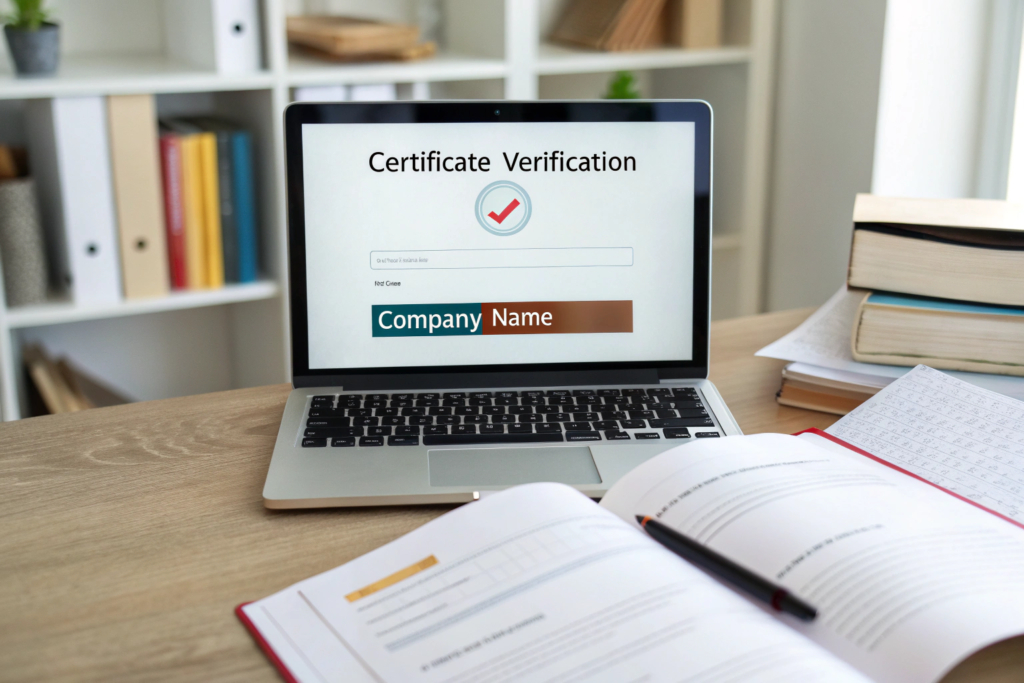
Start with the basics. Every legitimate certificate from a reputable body (like Hohenstein for OEKO-TEX®, Control Union for GOTS, etc.) has a unique certificate number and a clearly stated validity period. Your first action is never to accept a scanned PDF at face value. Go directly to the official online directory of the issuing body. For OEKO-TEX®, it's the OEKO-TEX® certification database. For GOTS, it's the GOTS public database. Enter the certificate number and the applicant's name (which should be the factory, not a trading company). The online record must match every detail: company name and address, product description, article numbers, certification scope, and issue/expiry dates. Any mismatch is a glaring red flag.
What are the Most Common Red Flags on a Falsified Document?
Through years of review, we've identified consistent patterns:
- Blurred Logos or Text: Often a sign of a low-quality copy/paste or scan of a legitimate certificate from another company.
- Mismatched Fonts: The body text might differ from the serial number or the issuer's header.
- Vague Product Description: "Knitted Fabric" instead of "100% Organic Cotton Jersey, dyed, for infants (Class I)". Genuine certificates are highly specific.
- "Applicant" is a Trading Company, not the Manufacturer: This is a major warning. The certificate should be issued to the entity that has physical control over the production process. A trader cannot guarantee a factory's compliance.
- Expired Dates or No Expiry Date: Certificates are valid for one year (for standard ones). An old certificate is worthless.
A Canadian client once showed us a "GOTS" certificate where the GOTS logo was slightly pixelated and the "Control Union" logo was from an old version. A 2-minute check on the GOTS database revealed no record of that number. They had almost placed a $50,000 order. Learning to spot these signs is crucial. Guides like Textile Exchange's guide to verifying sustainability claims are excellent starting points.
Why is Direct Database Verification Non-Negotiable?
The database is the source of truth, independent of the factory. Let's say a factory sends you Certificate #12345 for OEKO-TEX® Class I. You check the OEKO-TEX® portal. The number exists, but it's issued to a different company in a different province for "polyester thread." This is a "hijacked" certificate number—a common fraud. Or, the database shows the certificate is for "Class II" (adults), not "Class I" (babies). This is a doctored document. We insist our clients verify our certificates this way. For every order, we provide the direct URL to the official database entry for our relevant certificates, such as our Global Recycled Standard (GRS) certification for recycled polyester. This transparency is the only basis for trust. For broader insight, industry watchdog sites like Ecotextile News often report on certification fraud cases, highlighting the scale of the problem.
What Factory Audit Questions Uncover Weak Control Systems?
A certificate is an output. The factory's management system is the engine that produces it. If the system is broken or non-existent, the certificate—even if genuine for a one-off test—is meaningless for ongoing production. Your goal in an audit (virtual or in-person) is to determine if the factory has integrated compliance into its daily operations. You're not just checking for a framed certificate on the wall; you're assessing the process behind it.
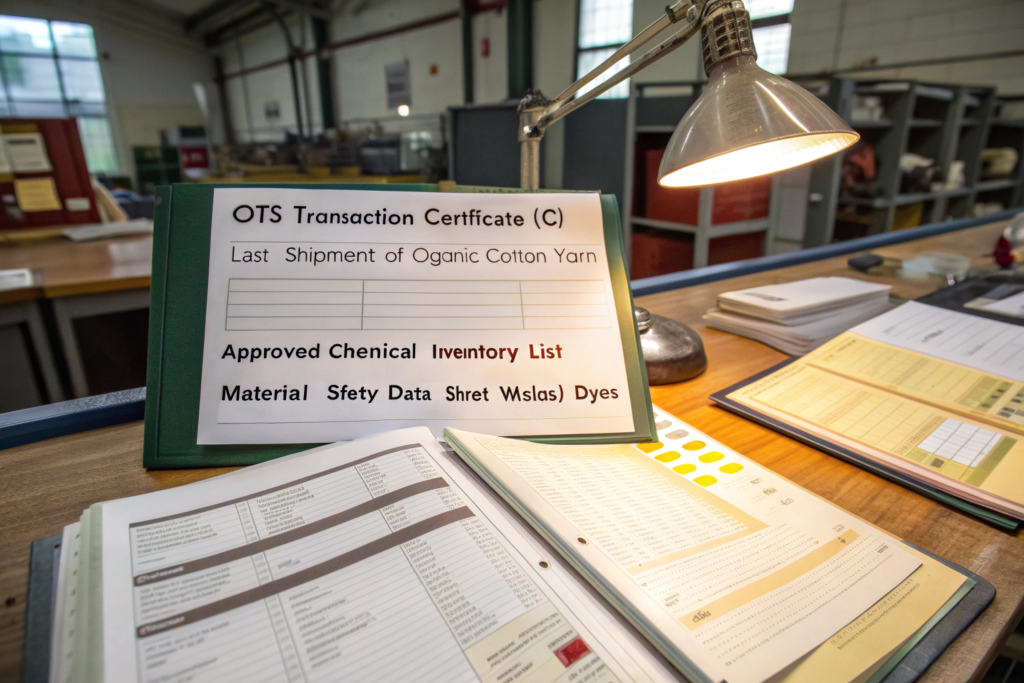
Move beyond yes/no questions. Ask for evidence. For a claimed GOTS certification, don't just ask "Are you GOTS certified?". Ask: "Can you show me your GOTS Transaction Certificate (TC) for the last shipment of organic cotton yarn?" The TC is the document that traces the organic material from source to final product. No TC means the claim is hollow. Ask: "Where is your approved chemical inventory list? Can I see the MSDS for the dyes you are using on this run?" A factory using banned chemicals won't have proper documentation. Ask to see the records of in-house testing. Do they check pH and formaldehyde on every dye lot? Where are the logs?
What Specific Evidence Should You Demand to See?
A credible factory will readily provide:
- Chemical Inventory & MSDS Binder: A maintained list of all dyes, auxiliaries, and finishes, with corresponding Material Safety Data Sheets that show compliance with required standards (e.g., AZO-free, low heavy metals).
- In-Process Quality Control (IPQC) Records: Daily logs of checks on parameters like washing fastness, pH value, and shrinkage during production, not just at the end.
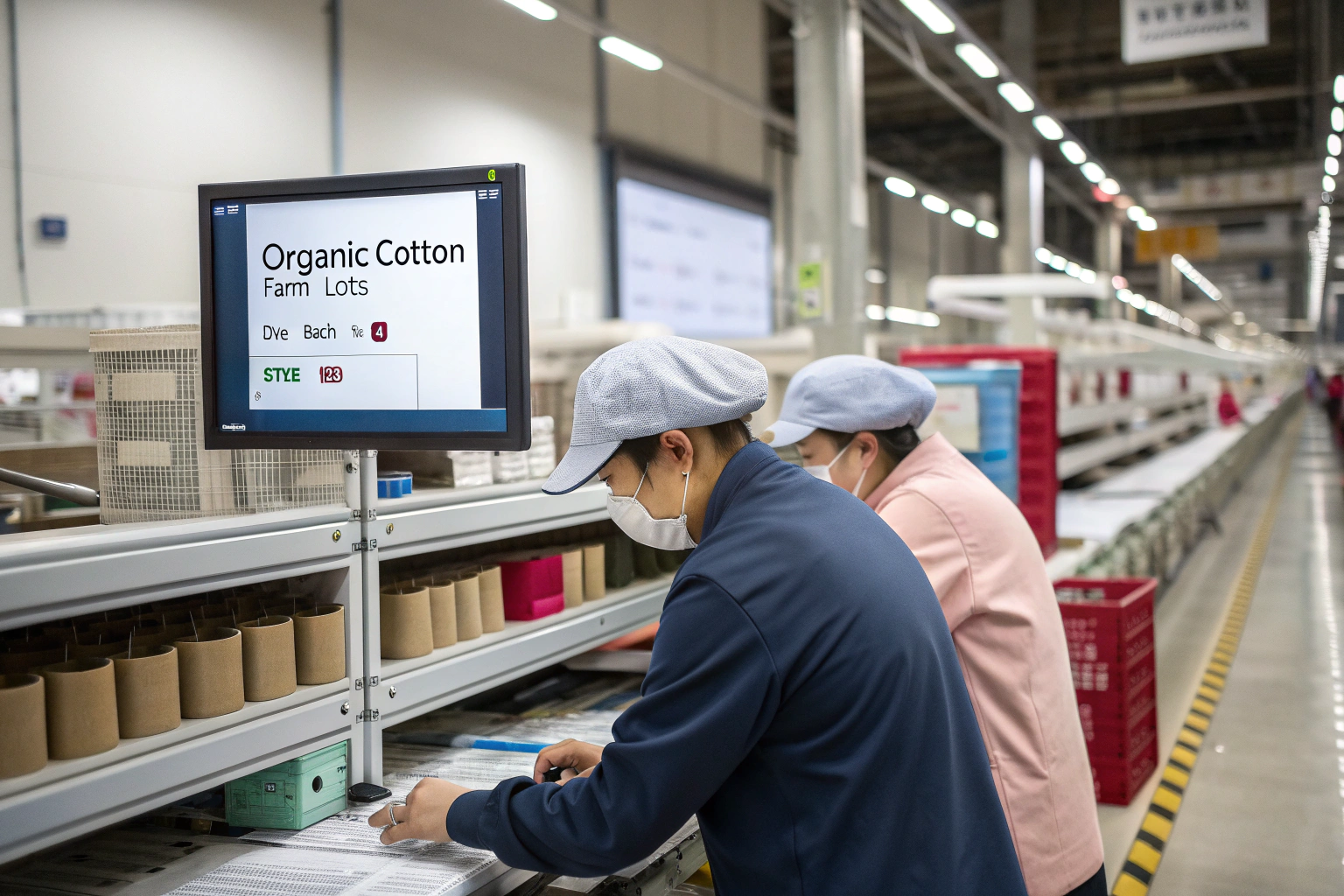
- Material Segregation Proof: For organic or recycled lines, how do they prevent mixing with conventional materials? Photos of labeled storage areas, separate production lines, or cleaning logs are key.
- Training Records: Proof that workers and QC staff are trained on relevant standards (e.g., CPSIA, EN 14682 for physical safety).
During a joint audit with a Dutch brand in 2022, we asked their previous potential supplier to see the testing log for lead content. The manager produced a single, handwritten sheet for the entire year. Our own log, in contrast, is a digital database with hundreds of entries per month, each linked to a fabric batch QR code. The difference in systemic control was stark. Frameworks like the SA8000 social accountability audit checklist provide a model for this evidence-based questioning, which can be adapted for safety/quality systems.
How Does a Factory's Investment in Equipment Signal Authenticity?
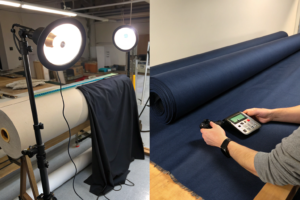
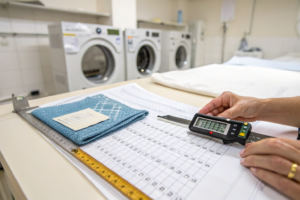
Talk is cheap; capital investment is a strong signal of real commitment. Ask: "What in-house testing equipment do you have?" A factory with a genuine focus on compliance will have invested in basic but crucial equipment:
- pH Meter & Test Kit: For checking every dye bath and finished fabric.
- Color Fastness Tester: For washing, rubbing, and perspiration tests.
- Small Parts Cylinder and Force Gauge: For kids' wear safety.
- XRF Analyzer (a major investment): For screening heavy metals like lead and cadmium in components.
If they have none and outsource all testing, their ability to control quality in real-time is near zero. They are hoping the final test passes, which is a risky strategy. At Shanghai Fumao, we guide virtual audit clients through a live video tour of our CNAS lab, showing the equipment in operation. This visual proof is powerful. Technical resources, such as Intertek's list of essential textile testing equipment, can help you understand what to look for.
Why Are Unannounced Pre-Shipment Inspections Critical?
The factory audit checks the system. The pre-shipment inspection checks the product. This is your final and most critical chance to catch a discrepancy between what was certified (possibly falsely) and what is actually in the cartons ready to ship to your customers. Announced inspections are often useless, as factories can prepare a "golden sample" batch for testing. Unannounced or very short-notice inspections conducted by a reputable third-party inspection agency (like SGS, BV, or QIMA) are the gold standard.
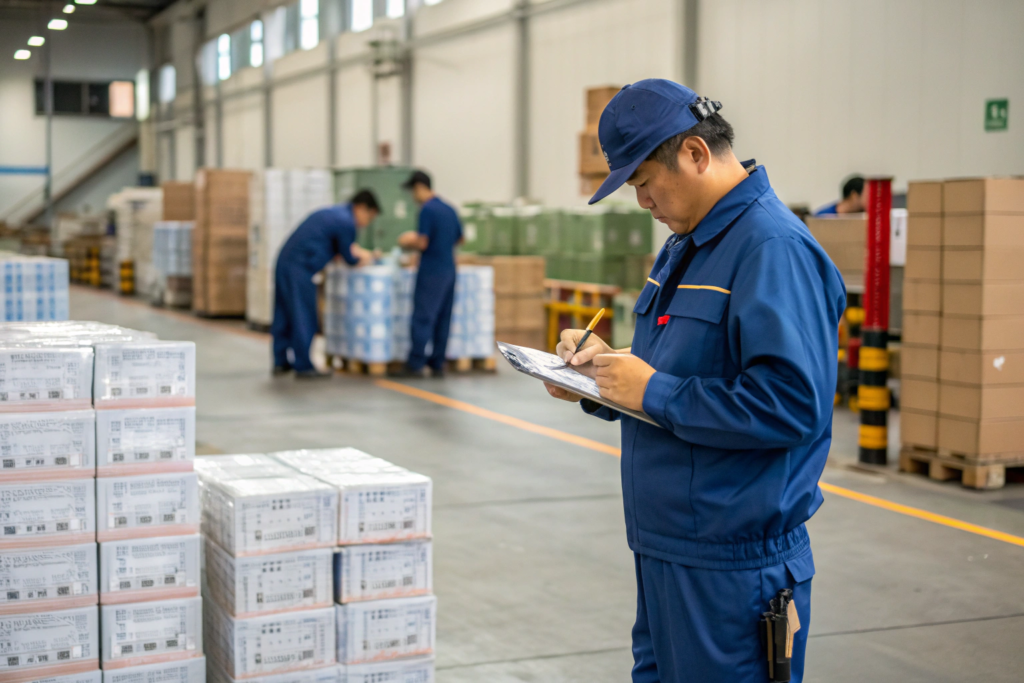
The inspector should arrive at the factory warehouse as the goods are being packed. Their job is to randomly select cartons from across the production run, based on a statistically valid AQL sampling plan, and perform two key actions: 1) Visual and functional checks against your spec, and 2) Pull retention samples for potential lab testing. The selection of samples for the retention is crucial—they must be truly random, not provided by the factory. These samples, sealed and signed by the inspector, are your insurance policy.
What Should a Safety-Focused Inspection Protocol Include?
Your instruction to the inspection agency must be hyper-specific. Beyond standard workmanship checks, mandate:
- Component Verification: Check that buttons, zippers, and prints match the approved safety-compliant suppliers listed in your Tech Pack.
- Physical Safety Checks: Use gauges to measure drawstring length, perform a pull test on buttons for small parts, check for sharp points or edges.
- Document Verification On-Site: The inspector must physically compare the shipping marks and packing list against any compliance labels or hangtags (e.g., do the care labels show the correct fiber content matching the certificate?).
- Retention Sampling for Lab Test: Clearly instruct them to cut samples from at least 3-5 different cartons/color ways, seal them in a tamper-evident bag, and ship them directly to a lab of your choosing (not the factory's usual lab) for compliance testing against the claimed standard.
In 2023, an American brand we work with used this method with a different supplier for a knitwear order. The unannounced inspection revealed the factory was using a non-approved, cheaper yarn blend. The certificate was for the approved blend. The order was stopped before shipment. This single inspection saved them from a massive FTC violation for mislabeled fiber content. Understanding the AQL (Acceptable Quality Level) sampling methodology is key to setting up an effective inspection.
How to Use Retention Samples for "Trust but Verify" Testing?
The retention samples are your ultimate weapon. Upon receipt, send them immediately to an accredited lab you have a direct relationship with. Test for the core claims:
- If the certificate is for OEKO-TEX® Class I, run a test for pH, formaldehyde, and a panel of banned AZO dyes.
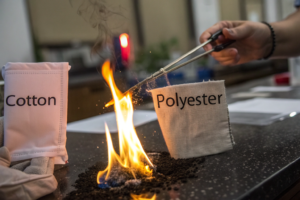
- If the claim is 100% Organic Cotton, conduct a fiber composition analysis (ISO 1833) to check for polyester or rayon blending.
- If UPF 50+ is claimed, run a UV transmission test.
The cost of this test (a few hundred dollars) is negligible compared to the risk. We encourage our clients to do this, even with us. It's the final, independent confirmation that the system worked. It transforms your relationship from "buyer and seller" to "partners in verified quality." Forums like Import Dojo's discussions on failed inspections are full of real-world examples of why this step is non-negotiable.
What Legal & Contractual Safeguards Must You Have?
When fraud is discovered, your contractual terms are your only leverage for financial recourse and legal protection. Vague purchase orders are a gift to dishonest suppliers. Your contract must explicitly tie payment, liability, and intellectual property consequences to the provision of authentic, valid certificates and compliance with all claimed standards. It must make the cost of falsification catastrophically high for the factory.
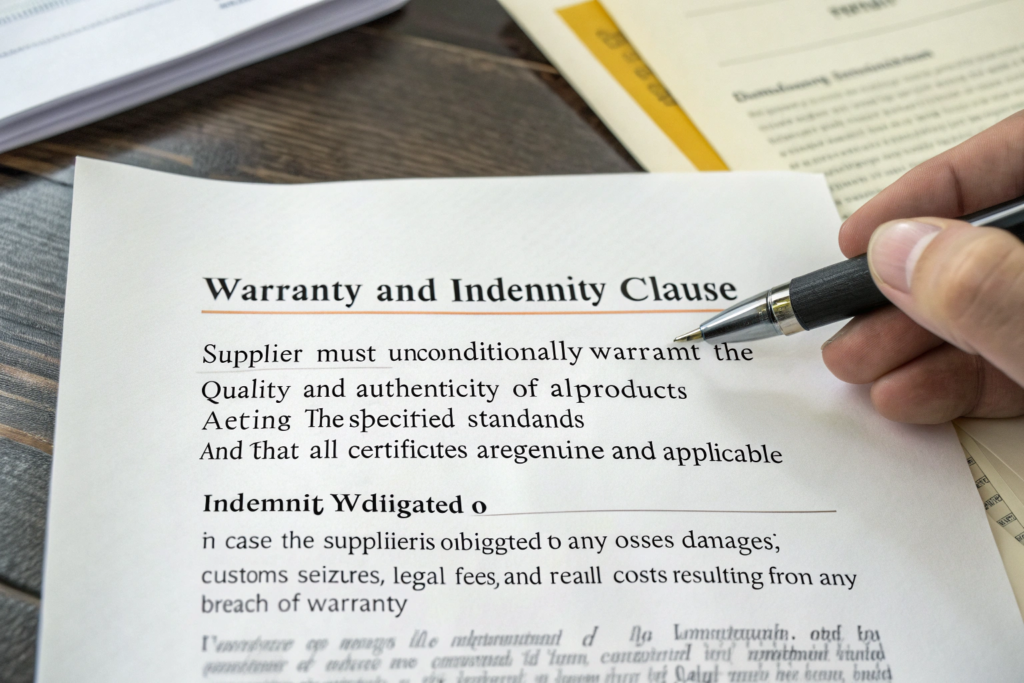
The cornerstone is a warranty and indemnity clause. The supplier must unconditionally warrant that all products meet the specifications and standards claimed, that all certificates are genuine and applicable, and that they have full rights to use any certified materials. They must then indemnify you (hold you harmless) against all losses, damages, customs seizures, legal fees, and recall costs arising from any breach of this warranty. This clause shifts the financial risk of fraud back to where it belongs: the fraudster.
What Should Your Certificate & Compliance Clause State?
This clause should be unambiguous. It must state:
- "Supplier shall provide, prior to shipment, valid and authentic certificates of compliance for [list standards, e.g., OEKO-TEX® STD 100, GOTS v7.0] issued by an accredited third-party body, specific to the ordered products. Certificate numbers must be verifiable in the issuing body's public database."
- "Payment of the final balance is contingent upon Buyer's verification and approval of said certificates."
- "Supplier grants Buyer the right to conduct unannounced pre-shipment inspections and testing at Supplier's facility at Supplier's cost if products fail to meet specifications."
- "Any falsification of documentation or material misrepresentation constitutes a material breach of contract, entitling Buyer to cancel all orders, demand full refunds, and seek legal damages."
We provide a draft of such terms as part of our commercial proposal because we have nothing to hide. This formalizes the trust. For a comprehensive overview, legal templates from organizations like the International Trade Centre's contract guidelines can be a useful reference, though they should be adapted by a lawyer.
How Does Secured Payment (e.g., LC) Mitigate Risk?
Your payment terms are a powerful risk mitigation tool. Avoid large upfront deposits (e.g., >30%). Use a Letter of Credit (L/C) for new or unproven suppliers. An L/C requires the supplier to present specific documents (including the certificates of compliance) to the bank in order to get paid. The bank acts as a neutral document checker. While not foolproof, it adds a layer of scrutiny. For established partners, you can tie the final payment (e.g., 30-40%) to the successful verification of certificates and passing of your own retention sample tests. This gives you financial leverage if issues are discovered post-shipment but before the supplier is fully paid. Articles on Trade Finance Global about using L/Cs for secure sourcing explain this mechanism in detail.
Conclusion
Avoiding falsified certificates is not about luck; it's about implementing a disciplined, skeptical, and proactive verification protocol. It requires you to be part detective, part auditor, and part contract lawyer. By authenticating every document, auditing the control system behind it, enforcing unannounced inspections with retention testing, and backing it all with iron-clad contracts, you build a supply chain resistant to fraud.
The factories that will welcome this level of scrutiny are the ones you want as long-term partners. They understand that real compliance is a competitive advantage, not a cost to be faked. At Shanghai Fumao, we see this rigorous process not as a burden, but as the foundation of a transparent and successful partnership. It's how we ensure that the trust you place in us—and the trust your customers place in you—is never betrayed.
Stop hoping for honesty and start verifying it. Download our free Supplier Certificate Verification Checklist and learn more about our transparent compliance process. To build a supply chain you can actually trust, contact our Business Director, Elaine, at elaine@fumaoclothing.com for a consultation.