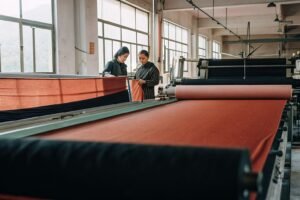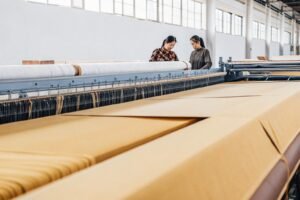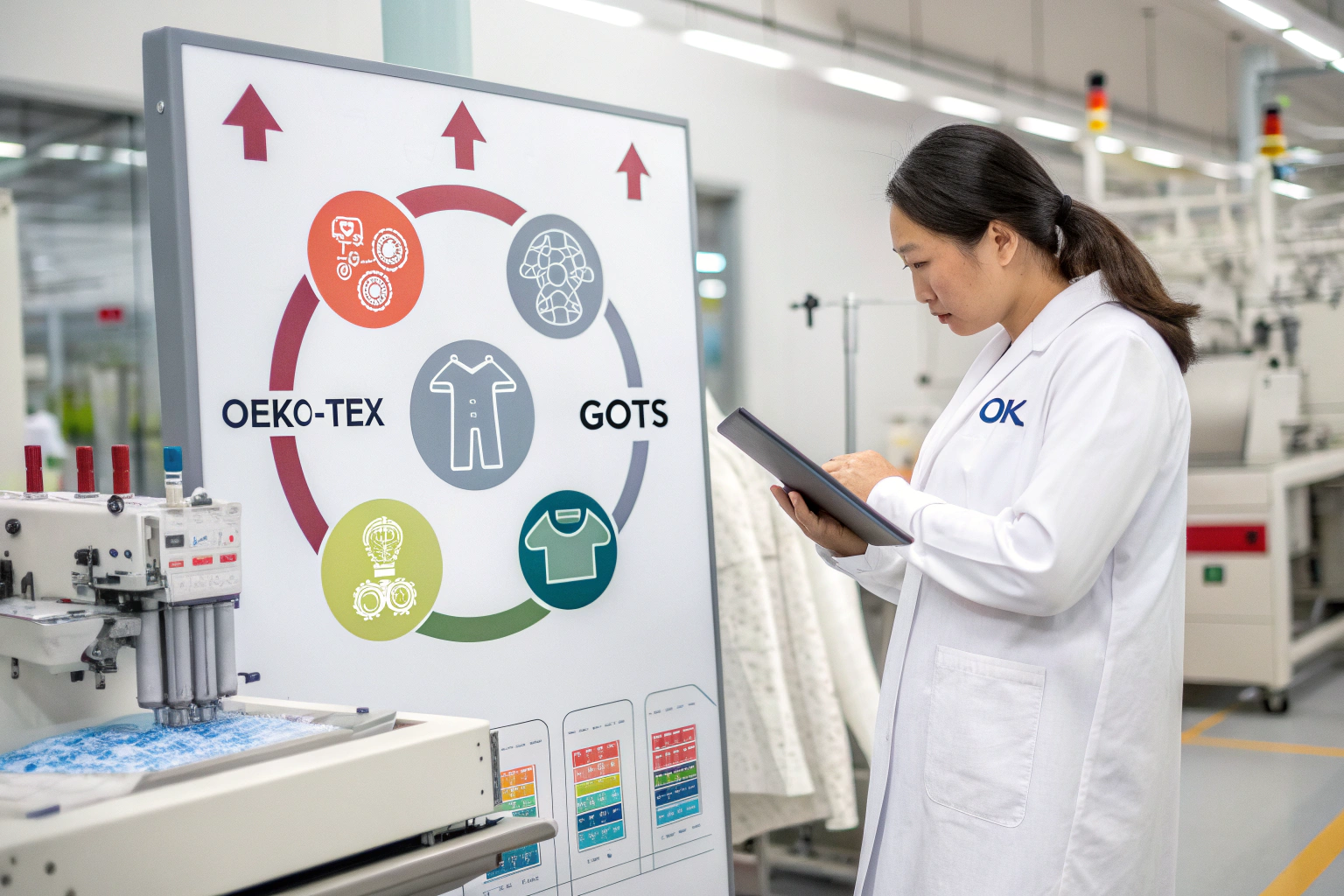
As a fabric supplier in Keqiao for over 20 years, I get this question a lot, especially from new American clients like Ron. They see our long list of certifications—OEKO-TEX, GOTS, SGS—and the first relief turns into a second thought: “Does this certificate from your weaving and dyeing factory actually protect my specific order of babywear, or my high-performance cycling jerseys?“ It‘s a smart question. In today‘s market, a certificate isn‘t just a document; it‘s your product‘s passport and your brand‘s insurance.
The short answer is yes, but with crucial nuances. Our certification strategy at Shanghai Fumao is built like our fabric: layered and tailored. We don‘t pursue a one-size-fits-all certificate. Instead, we match the certification scope precisely to the product‘s end-use and the client‘s market. Our CNAS-accredited in-house lab is the engine of this strategy, allowing us to pre-test fabrics against the right standards before they ever reach a third-party auditor. This means your shipment of flame-retardant workwear fabrics and your batch of organic cotton jersey for kids are protected under certifications specifically designed for their risks.
Let me pull back the curtain on how quality assurance really works in a Chinese textile hub. Many buyers think a factory certificate is a blanket approval. The reality is more strategic. Your fabric‘s final certification coverage depends on three pillars: the type of certificate, the product category you define, and the specific tests we run. Understanding this is key to turning compliance from a cost into a competitive edge. For partners who source from Asia, knowing the difference between a factory audit report and a product certificate can save you from costly recalls. I‘ll break down exactly how we at Shanghai Fumao navigate this to ensure your fashion line or technical apparel project is fully covered, legally safe, and market-ready.
What‘s the Real Difference Between Factory and Product Certificates?
You see “Certified Supplier“ on an Alibaba page and feel safe. But if that certification only audits the factory‘s management system and not the chemicals in your specific dyed fabric, you‘re exposed. This distinction is the bedrock of import safety.
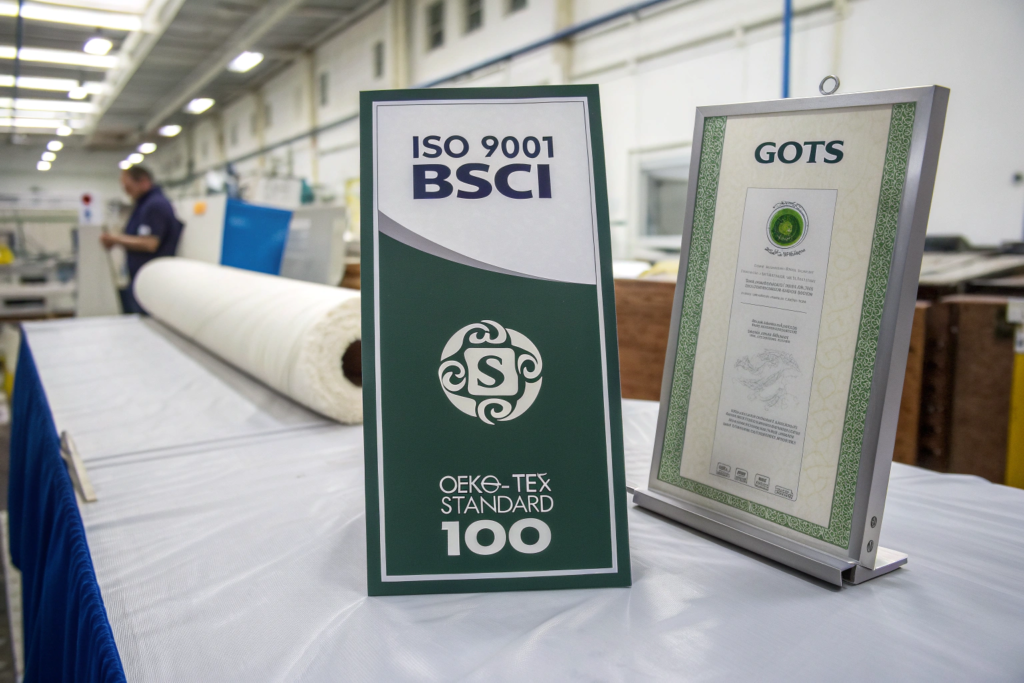
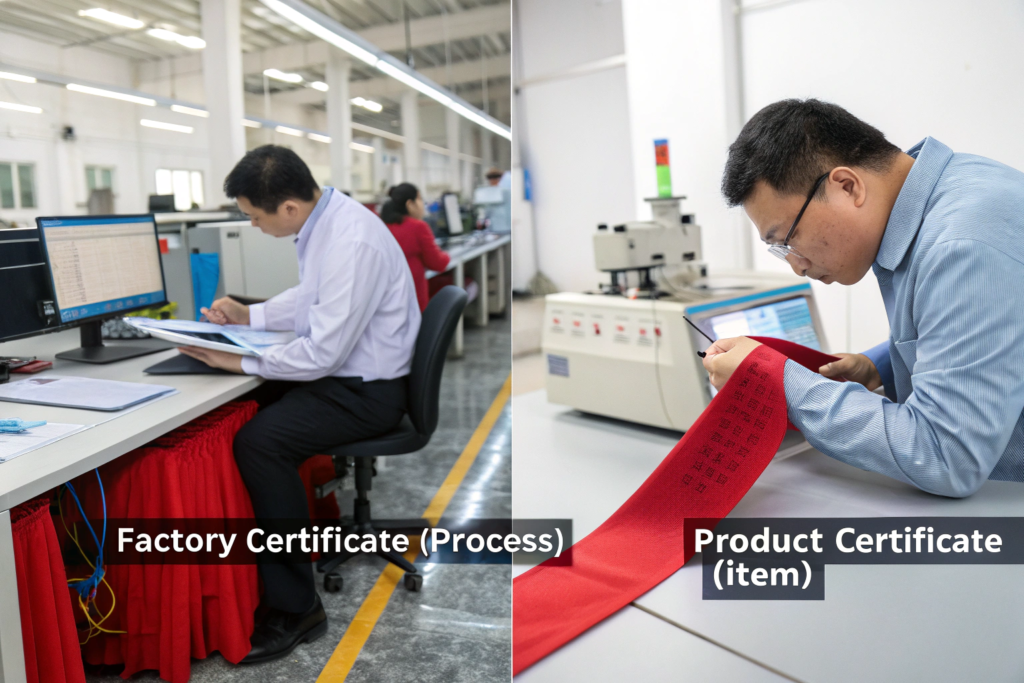
A factory certificate (like an ISO 9001 or a BSCI audit) is about the process. It answers: Does this facility have a quality management system? Does it operate ethically? It‘s a snapshot of the organization. A product certificate (like OEKO-TEX STANDARD 100, GOTS, or a UL certification) is about the item. It screams: This specific roll of fabric is free from X harmful substances and meets Y performance criteria for Z end-use. For a U.S. brand, a product certificate is your legal shield. I‘ve seen a client almost get into serious trouble because their supplier showed a shiny factory ISO certificate, but the actual printed fabric failed CPSIA lead content tests for children‘s products. The factory was well-managed but using a non-compliant pigment.
How Do We Define the Scope for a Product Certificate?
The scope is everything. When we initiate certification for a client at Shanghai Fumao, the first question is: “What is the final product?“ A certificate for “polyester fabric“ is too vague. We need to define it as “polyester knitted fabric for making adult Class II intimate apparel“ or “woven cotton canvas for making children‘s Class I apparel (ages 0-3).“ This definition directly dictates the testing regime. For example, the permissible limits for formaldehyde are drastically lower for fabrics touching baby skin versus those used for decorative home textiles. Our lab technicians are trained to guide this scoping process. We often refer to excellent resources like the American Apparel & Footwear Association (AAFA) Restricted Substances List (RSL), which provides a clear framework for navigating global chemical compliance requirements for apparel and footwear. Getting the scope wrong means either paying for over-testing or, worse, under-testing and facing non-compliance.
Can One Certificate Cover Multiple Fabric Types and End-Uses?
Sometimes, but it‘s a strategic choice. Broad-scope certificates exist. For instance, an OEKO-TEX STANDARD 100 certificate can cover multiple product classes if applied for correctly. However, the certificate will list each approved article and its class. The key is transparency with your certifier. In our practice, we bundle similar products from a client under one certificate application to save them cost and time. For a Danish sportswear brand we worked with in late 2023, we managed to get their recycled polyester performance fabrics and their organic cotton jersey for casual wear under a comprehensive OEKO-TEX certification, but we had to submit separate, detailed samples for each unique composition and colorway. The process was smooth because our in-house pre-testing ensured they passed the formal audit on the first try. For complex blends or innovative materials, it‘s wise to consult detailed guides on platforms like Textile Exchange‘s Materials Hub, which offers deep insights into sourcing certified recycled polyester and organic materials.
Which Certifications Are Essential for Exporting to the US & EU?
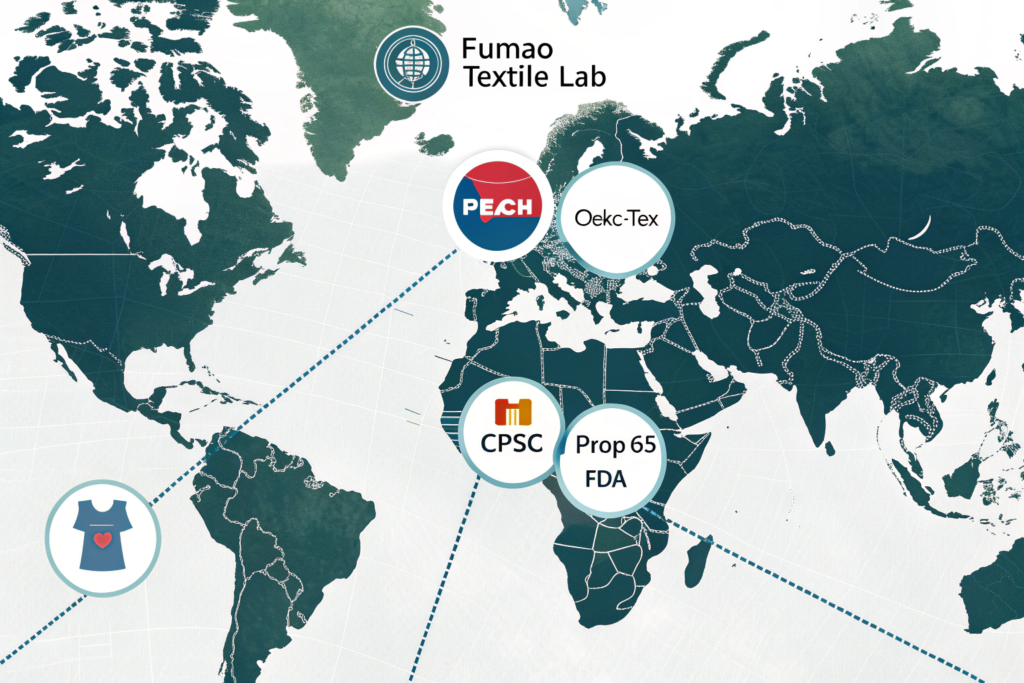
The markets define the rules. For the EU, REACH and OEKO-TEX are your baseline. For the U.S., while mandatory federal rules exist for specific items (like children‘s sleepwear flame resistance), the real drivers are retailer standards and state laws like California‘s Prop 65. A certificate that satisfies both is the goal.
For our European clients, the conversation always starts with REACH SVHC (Substances of Very High Concern) compliance. It‘s not a certificate you “get“ but a regulation you must comply with. Our in-house testing provides the data to prove compliance. Many clients then add OEKO-TEX STANDARD 100 for its recognized consumer-facing label. For the U.S. market, especially with brands targeting major retailers, the FDA regulations for textiles and the Consumer Product Safety Commission (CPSC) standards come into play. A certificate from a CPSC-accepted laboratory is gold for children‘s products. In 2024 Q1, we helped an American startup producing yoga wear navigate this. They needed fabrics that were both Prop 65 compliant (for California) and met the stringent eco-criteria of their European distributors. We achieved this by sourcing GOTS-certified organic cotton yarn and using dyes from a ZDHC (Zero Discharge of Hazardous Chemicals) MRSL-conformant list, then verifying everything through our lab and a third-party auditor. The result was a single fabric batch with a dossier of evidence acceptable on both continents.
Are Organic Certifications (GOTS, OCS) Worth the Investment for Performance Fabrics?
This is a hot topic. Pure organic certifications like GOTS are fiber-specific and have strict environmental and social criteria for the entire production chain. For performance fabrics—think moisture-wicking polyester for sportswear or UV-resistant nylon for swimwear—the primary fiber is often synthetic. You cannot have “organic polyester.“ So, GOTS isn‘t applicable. However, the demand for transparency is. Here, certificates like the Global Recycled Standard (GRS) or OEKO-TEX ECO PASSPORT (for dyes and chemicals) become critical. They answer the sustainability question for synthetics. We guided a European brand in 2023 to use our GRS-certified recycled polyester for their running tights. The certificate gave them the verified recycled content claim their customers wanted, while our OEKO-TEX certification covered the chemical safety. It was a powerful combo. For brands exploring this route, resources like the Sustainable Apparel Coalition‘s Higg Index Materials Module can be invaluable for comparing the environmental impact of different certified materials.
How Do We Handle Certifications for Niche Products Like Flame-Retardant Workwear?
Niche products demand niche certifications. For flame-retardant (FR) fabrics, a general safety certificate is useless. You need specific performance certifications like UL (Underwriters Laboratories) listed, or compliance with standards like NFPA 2112 (for flash fire protection) or EN ISO 11612 (for heat and flame). The process is totally different. It‘s not just about testing chemicals in the fabric, but testing the fabric‘s behavior under fire. We work with specialized coating factories and send final fabric samples to accredited labs like UL itself or SGS for the actual flame tests. The certificate then attests that this specific fabric construction with its specific FR treatment passes a specific standard. (Here‘s an insider tip: consistency is king. A small change in the base fabric weight or the FR coating recipe can invalidate the certificate.) For brands entering this technical field, engaging with industry forums like Industrial Fabrics Association International (IFAI) can provide practical insights into specifying and sourcing certified technical textiles for protective clothing.
How Does In-House Testing Prevent Certification Failures?
This is where we separate the talkers from the doers. Sending samples straight to SGS and hoping for the best is a high-stakes, high-cost gamble. Our CNAS-accredited lab is our first line of defense, turning certification from a reactive cost into a proactive quality control step.
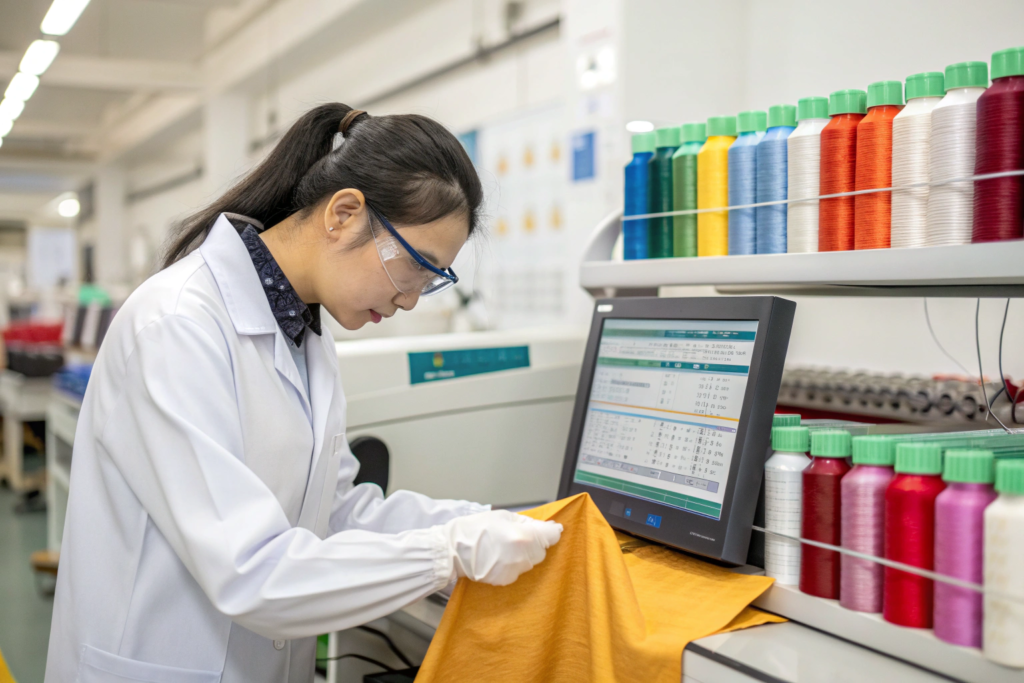
Think of it like a student taking a practice exam before the final. We run the same tests—colorfastness, pH, formaldehyde, extractable heavy metals, shrinkage, tensile strength—using the same methods as external labs. If we find an issue, say a colorfastness to rubbing score that‘s borderline, we can work with our dyeing partner to adjust the formula before we produce the bulk order and submit for official certification. This saves weeks of time and avoids the cost of a failed test and re-production. A concrete case: In March 2023, a client from Germany ordered a large batch of bamboo silk (BAMSILK) for luxury loungewear. During our in-house pre-test, we detected a pH value slightly outside the OEKO-TEX range. We traced it to a finishing agent. Our team adjusted the washing process in the dyeing factory, re-tested, and confirmed it was within limit. The subsequent official OEKO-TEX application passed seamlessly. Without our lab, that batch would have failed, costing the client over $15,000 in delays and re-work.
What Equipment is in Your Lab and How Does it Simulate Third-Party Tests?
Our lab isn‘t just a few scales and pH meters. To genuinely mirror third-party audits, we‘ve invested in equipment like a spectrophotometer for color measurement, a Martindale abrasion and pilling tester, a vertical flammability chamber for basic flame tests, and gas chromatography-mass spectrometry (GC-MS) for screening harmful substances. The protocols our technicians follow are aligned with ISO, AATCC, and GB (Chinese National Standard) methods, which are the foundations for international certification. This allows us to generate reliable data that predicts external lab results. For professionals interested in setting up basic quality checks, communities like The Fashion Network‘s manufacturing forums often have threads discussing essential equipment for a startup apparel brand‘s quality control.
Can You Share a Case Where Pre-Testing Caught a Critical, Non-Obvious Issue?
Absolutely. The most valuable catches are the ones you don‘t expect. We had an order from a U.S. brand for recycled polyester fleece in November 2023. The fabric felt and looked perfect. However, during our routine pre-test for OEKO-TEX, our GC-MS screening flagged a trace amount of a specific amine, a potential byproduct of certain azo dyes. This was puzzling because the fabric was a deep black, and the dye used was supposed to be compliant. We dug deeper and found the issue was not with the dye itself, but with a contaminated batch of a dye-fixing agent from a sub-supplier. This agent wasn‘t even on our radar for that test. We switched the agent, re-dyed a sample, and the amine disappeared. If that fabric had shipped, it would have violated EU REACH Annex XVII and could have led to a total recall. This incident reinforced why building a relationship with a vertically integrated supplier like Shanghai Fumao matters—we control and audit more of the chain.
What‘s Your Process for Managing Certificates Across a Complex Supply Chain?
Our strength is vertical integration—weaving, dyeing, printing, finishing. But certification must flow through this chain like a thread. A break at any link breaks the final product‘s certification. Our process is built on documented handoffs and supplier audits.
We manage this through a digital QC platform. Each production step—from the incoming GRS-certified recycled polyester chips at our weaving mill to the ZDHC-conformant dyes at the dyehouse—requires a digital “certificate of conformity“ from the sub-supplier. These are uploaded to the platform and linked to your production order. When it‘s time to apply for the final product certificate (e.g., GRS), we have a complete digital trail. This was crucial for a UK client in February 2024 who needed full traceability for their ESG report. We provided them with a package that included our GRS transaction certificate, the certs from our yarn supplier, and our dye stuff supplier, all matching the volume of their order. This level of detail is becoming the new normal. For brands managing this themselves, tools like the ZDHC Gateway are essential for finding and vetting chemical suppliers compliant with manufacturing restricted substances lists.
How Do You Ensure Cooperative Factories (Dyeing, Printing) Maintain Standards?
We don‘t just “cooperate“; we partner and audit. We have a qualified supplier list for dyeing, printing, and coating. Before they get on the list, our QC team audits their facility, processes, and chemical management. We then conduct quarterly unannounced spot-checks. More importantly, we provide them with our testing protocols and often train their staff. We treat them as an extension of our own facility. For instance, if a printing factory uses a new pigment, they must send us a sample for pre-testing before running it on our client‘s order. This system creates aligned incentives. A great resource for understanding these complex chains is Fashion Revolution‘s Transparency Index, which highlights why mapping your apparel supply chain for deeper transparency is critical for risk management.
What Documentation Do You Provide to Clients for Customs and Retailer Audits?
We provide a complete “compliance dossier.“ This isn‘t just one PDF. It typically includes:
- The Product Certificate (e.g., OEKO-TEX STANDARD 100) with certificate number, product description, and validity.
- Detailed Test Report from the accredited third-party lab (SGS/ITS/BV), showing all parameters and pass/fail results.
- Mill Certificates & Transaction Certificates for fiber origin (e.g., GRS TC, OCS Blended TC).
- A Spec Sheet with full composition, weight, width, and care instructions.
- A Certificate of Origin for customs.
We package this digitally in a secure folder for the client. For a client in the outdoor sector, we even helped them compile this data into the specific format required by a major European retailer‘s online audit portal. This turnkey documentation is part of our service that goes beyond just selling fabric. It‘s what a partner like Shanghai Fumao delivers.
Conclusion
Navigating textile certifications doesn‘t have to be a maze of acronyms and anxiety. As we‘ve seen, effective coverage hinges on understanding the critical difference between factory and product audits, strategically selecting certifications aligned with your market and product type, leveraging in-house testing to de-risk the process, and managing the entire supply chain with documented rigor. At its core, a certificate is not just a piece of paper; it‘s the culmination of a controlled, transparent, and quality-obsessed manufacturing process.
For over two decades at Shanghai Fumao, we‘ve built our operation on this principle. We co-create value with our partners by embedding compliance into the fabric from the first sketch. We know that your success depends on more than just beautiful materials—it depends on trustworthy, defensible, and market-ready products. If you‘re looking for a partner who treats your certification and quality needs as mission-critical, who can guide you through the complexities of sourcing from China with confidence, and who delivers on the promise of end-to-end control, let‘s start a conversation. To discuss how we can secure the right certifications for your next apparel collection, you can reach out directly to our Business Director, Elaine. She and her team are experts in translating your brand‘s requirements into a flawless production reality. Contact Elaine at: elaine@fumaoclothing.com.