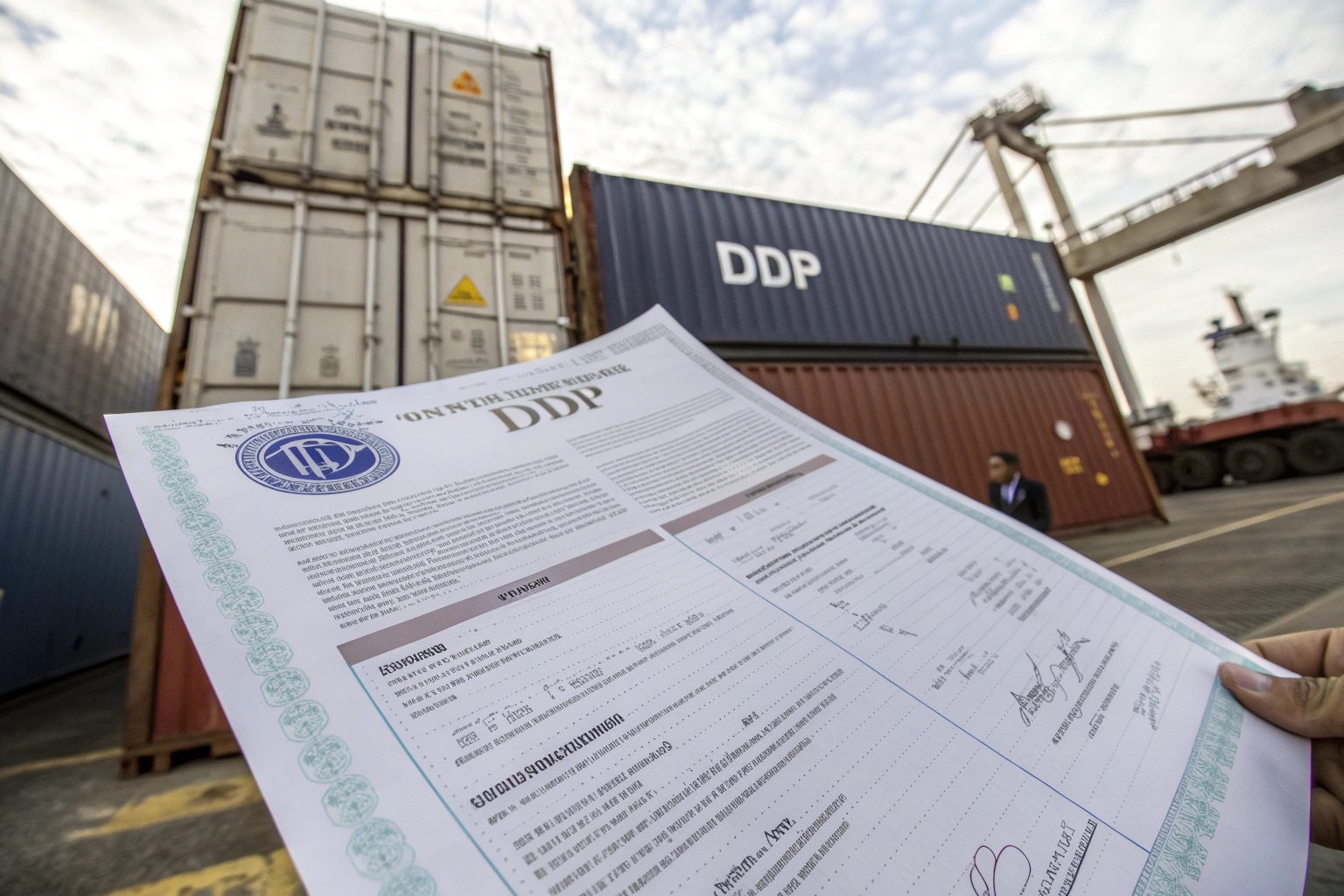
When you choose DDP (Delivered Duty Paid) shipping from China, you’re buying peace of mind: a single price that covers everything from our factory floor to your warehouse door. But what happens if customs questions your shipment’s value or composition? What proof do you have that the goods match what you paid for? The hidden risk in many DDP agreements is the lack of binding, middleman-proof documentation. That’s why at Fumao, our DDP service isn’t complete without a formal Transaction Certificate (TC). It’s not just paperwork; it’s the legal and logistical backbone that turns a simple delivery promise into a fully insured, transparent transaction.
Fumao’s DDP service includes a Transaction Certificate because it legally defines the shipped goods, substantiates the declared value for customs, provides a clear record for payment and insurance, and protects both parties in case of disputes. In a DDP shipment, where we, the seller, assume all risks and costs until delivery, the TC is our—and your—definitive proof of what was contracted, produced, and shipped. It transforms the shipment from a "black box" into a fully documented, legally accountable consignment.
Think of the Transaction Certificate in a DDP deal as the "birth certificate" for your container. Without it, you’re relying on commercial invoices and packing lists that can be ambiguous. With it, you have an integrated document that ties the product specifications, commercial terms, and compliance data into one binding record. This is especially critical under Incoterms® 2020 DDP rules, where the seller’s liability is highest. The following sections will break down exactly how this single document shields you from customs delays, financial discrepancies, and quality claims.
How Does the TC Prevent Customs Delays in DDP Shipments?
In a DDP shipment, we handle customs clearance in both the export (China) and import (your country) countries. The greatest point of friction is always import customs. Authorities need to verify the goods’ classification, value, and origin to assess the correct duties and taxes (which we have already paid on your behalf). A vague or inconsistent description invites inspection, valuation disputes, and delays.
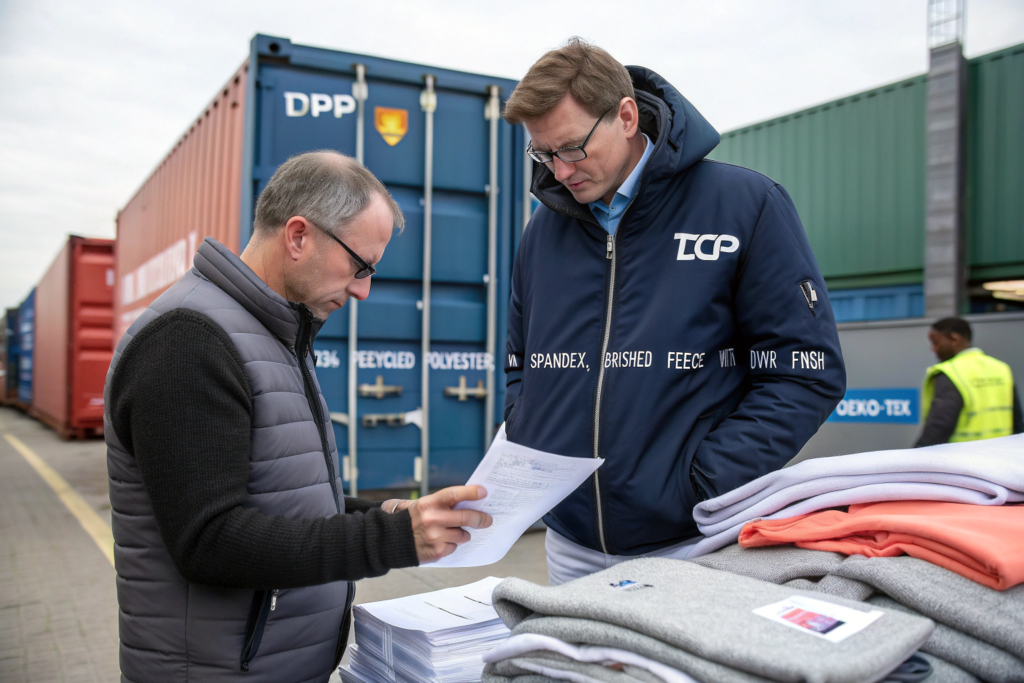
The Transaction Certificate prevents this by providing authoritative, detailed product specifications that support the Harmonized System (HS) code we declare. Instead of a commercial invoice stating "Men’s Knit Cotton Sweaters," our TC will specify: "Men’s 100% Combed Cotton, 2/1 Rib Knit Sweaters, 280gsm, with Oeko-Tex Standard 100 Certification, Style #FW24-101 as per Approved Sample S-5678." This precise description aligns perfectly with the supporting lab test reports and sample records we submit electronically to customs brokers. It leaves little room for a customs officer’s subjective reinterpretation, which can lead to a different, higher-duty classification.
For example, a client shipping performance fleece jackets to Germany under DDP faced a potential hold because the declared HS code for "synthetic knit jackets" was questioned. Because our TC explicitly stated the fabric composition as "93% Recycled Polyester, 7% Spandex, Brushed Fleece with DWR Finish" and referenced the specific EU duty rate for recycled textile products, we were able to provide the TC and supporting Oeko-TEX certification documents to the broker immediately. The shipment was cleared without physical inspection, saving over a week of demurrage and warehouse fees.
What specific TC data is used for customs valuation?
Under WTO rules, customs value is typically the transaction value—the price actually paid. Our TC formally states this DDP contract value as the basis. Crucially, it also itemizes what this all-inclusive DDP price covers: the ex-factory cost, international freight, insurance, and all duties/taxes. This transparency is vital. If customs suspects the declared value is too low, they can impose their own valuation, leading to back-charges and penalties—even under DDP. Our TC, as a signed contract, provides irrefutable proof of the legitimate transaction value. Resources like the World Customs Organization’s guide on customs valuation emphasize the importance of such contractual documents.
How does the TC manage "First Sale" or "Middleman" complications?
Many brands source through agents or buying offices. In these "first sale for export" scenarios, the value chain can be complex. Our TC clearly identifies Shanghai Fumao as the manufacturer and seller directly to the consignee (you or your agent). This establishes a clean, direct transactional relationship for customs purposes, avoiding the confusion and heightened scrutiny that comes with triple-party invoicing. It proves the declared value is the true price paid for the goods moving across the border, which is a cornerstone principle for managing import compliance for US fashion brands.
Why Is the TC a Financial Safeguard in DDP Agreements?
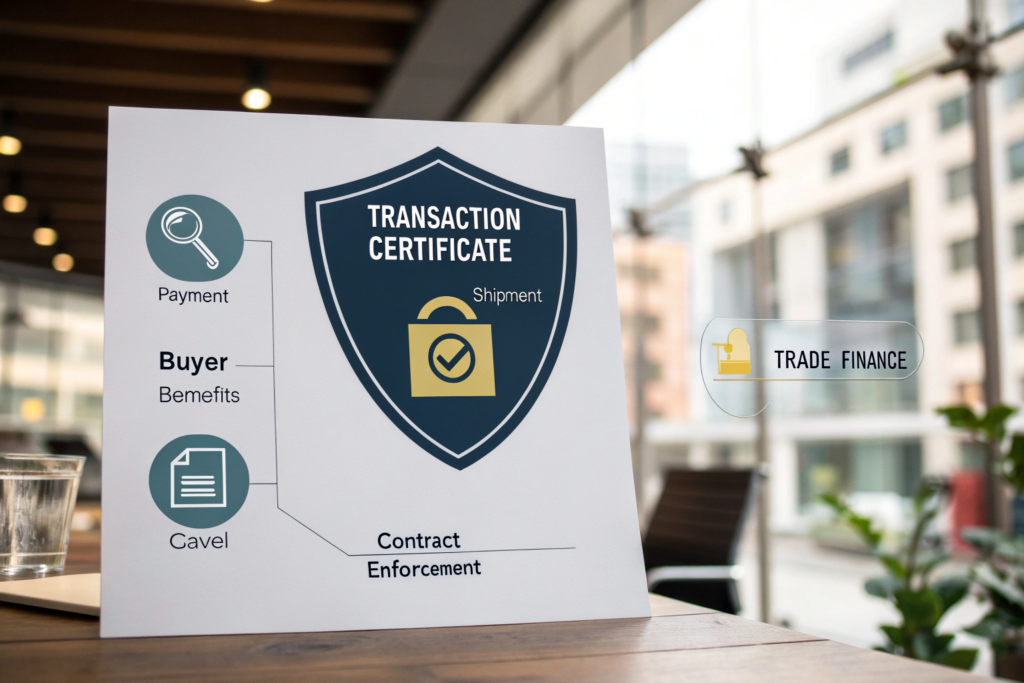
DDP involves the highest level of financial risk for the seller, as we prepay significant costs (freight, duties, taxes) on your behalf before final payment is often received. Conversely, you risk making a large final payment before the goods clear your local customs. The Transaction Certificate creates a fair, clear financial trigger point that protects both sides.
For you, the buyer, the TC acts as the definitive delivery instruction and proof of shipment. Your final payment milestone (often 70% after shipment, 30% after delivery) can be contractually tied to the issuance of the TC and the Bill of Lading. The TC proves that the goods meeting the agreed specifications have been handed to the carrier. This prevents disputes where a buyer might say, "I’m not paying the balance because I’m not sure what you shipped." The TC removes that ambiguity. It provides the evidence needed for you to confidently release payment or for your bank to process a Letter of Credit.
For us as the seller, the TC is our audit trail and payment justification. When we present documents to our bank for trade financing or to process your payment, the TC is the core commercial document that validates the transaction. It proves we shipped what was ordered. In the rare case of a payment delay or dispute, the TC is the first document our legal team would use to enforce the contract. For instance, our TC includes a clause acknowledging that the goods described therein are "deemed accepted as per contract specifications upon shipment under DDP terms, subject to final destination inspection for damage or loss." This balances risk appropriately.
How does the TC interface with Cargo Insurance under DDP?
Under DDP, we arrange insurance for the journey. The insured value on the policy must match the commercial value of the goods. The Transaction Certificate is the primary document we provide to the insurer to establish that value. In case of a claim—for damage, loss, or theft—the insurer will cross-reference the claim against the TC’s description and value. A mismatch can void coverage. A detailed TC ensures a smooth claims process. We once had a container damaged in transit to Long Beach; because our TC itemized the quantity and value of each style of premium bamboo-cotton knitwear down to the carton level, the insurance settlement was processed in 10 days without dispute.
Can the TC help with VAT/GST reclaim in the buyer’s country?
In some jurisdictions, businesses can reclaim the import VAT/GST that was paid as part of the DDP landed cost. To do this, customs authorities require proof of the VAT-paid amount. The DDP commercial invoice, backed by the detailed Transaction Certificate and the customs entry documents from the import country (which we provide), forms the essential evidence pack for your accountant to file the reclaim. The TC’s clear breakdown of the duty and tax components is invaluable here. Understanding the process for VAT reclamation on imported goods in the EU is much simpler with a precise TC.
How Does the TC Document Quality & Compliance in a DDP Chain?
When goods are shipped DDP, the buyer’s first physical inspection often occurs at their own warehouse—thousands of miles and several weeks after production is complete. If the goods are sub-standard, the recourse is complex and costly. The Transaction Certificate mitigates this by creating a pre-shipment "quality snapshot" that is legally binding.
The TC is issued only after Final Random Inspection (FRI) is passed. In our process, this means our QC team, and often a third-party inspector hired by the client, has checked the goods against the approved sample and tech pack. The TC includes a direct reference to the successful inspection report (e.g., "FRI Report #QC-240515, AQL 2.5, passed"). By signing the TC, we are legally attesting that the shipped goods conform to that inspected standard. This is a powerful commitment. It means you are not just hoping the quality is right; you have a document that makes our liability explicit.
For compliance-driven products, the TC is the vehicle for certification claims. Suppose you order GOTS-certified organic cotton polo shirts. The TC will state: "GOTS Certified Organic Cotton, Certificate License No. CU-XXXXXX." This binds the physical goods in the container to that certification. If an audit by your certifier or a consumer protection agency finds otherwise, the TC provides the direct link for a breach-of-contract claim against us. This level of traceability is non-negotiable for brands selling into regulated markets like the EU, where supply chain due diligence laws are now in effect.
What happens if goods arrive damaged or non-conforming under DDP?
The DDP Incoterm places the risk of loss or damage on us, the seller, until delivery at your named place. If goods arrive damaged, the insurance claim process is initiated (as noted above). If they are non-conforming (i.e., not as specified), the Transaction Certificate is the baseline for the claim. You would compare the received goods to the detailed description in the TC. A clear mismatch provides the grounds for a remedy claim under the contract. Without a TC, you’re arguing about memory and intent. With it, you’re comparing a physical item to a contractual description. Our TCs have been instrumental in swiftly resolving such issues, often leading to partial refunds or replacement production without lengthy legal battles.
How does the TC support responsible sourcing commitments?
For brands with ESG (Environmental, Social, and Governance) pledges, the supply chain is the hardest part to document. Our TC can be extended to include references to social audit compliance certificates like BSCI or SMETA, and environmental certifications like GRS (Global Recycled Standard). By including these in the TC, we embed our compliance into your commercial documentation, giving your sustainability team the direct evidence they need for their reports. This turns a logistical document into a tool for brand integrity. For brands looking to understand the landscape of ethical manufacturing certifications in Asia, starting with what can be included in a TC is a practical first step.
What Are the Strategic Advantages of Fumao’s Integrated DDP+TC Model?
Choosing a supplier that bundles a robust Transaction Certificate with true DDP service isn’t just about avoiding problems—it’s a strategic decision that streamlines your operations, strengthens your financial controls, and de-risks your entire import process.
The primary advantage is simplified internal procurement and accounting. Your team receives one comprehensive document (the TC) that serves as the purchase order confirmation, shipping notice, quality certificate, and customs documentation baseline. This reduces administrative overhead and eliminates document chasing. For your finance department, reconciling a single invoice (the DDP invoice) backed by a detailed TC is far easier than reconciling multiple charges from a freight forwarder, customs broker, and supplier.
Furthermore, it enhances supply chain transparency for your own customers. In an era where provenance matters, you can use the data from our TC—such as material origin, certification numbers, and manufacturing date—to tell a verified story about your product. This is a tangible competitive edge. A UK retailer we work with uses excerpts from our TCs for their traceable merino wool base layers as part of their in-store marketing, boosting consumer trust and justifying a premium price point.

How does this model future-proof against regulatory changes?
Global trade regulations are constantly evolving, with increased focus on sustainability, forced labor due diligence (e.g., U.S. UFLPA), and carbon reporting. Our DDP+TC model is built for data agility. Because we control the entire chain from our own weaving and production through to final delivery, we can gather and certify the necessary data points—like carbon footprint calculations for textile shipments or supplier audit trails—and embed them directly into the transactional documentation. When new regulations hit, we can adapt the TC to include the required declarations, making your compliance seamless.
Why is Fumao’s in-house control key to this service?
Many traders offer "DDP," but they outsource production, shipping, and clearance. This creates documentation gaps. At Shanghai Fumao, because we control the fabric production and garment manufacturing (or have deeply integrated partner factories), and manage logistics through our own department, we have a seamless information flow. The TC we issue is not a post-production compilation; it’s a live document generated from our integrated ERP system, reflecting real-time data from the factory floor, the testing lab, and the shipping dock. This vertical integration is why our "DDP with TC" is a guarantee, not just a service label. It’s the operational reality behind our slogan of being a leading wholesale fabric manufacturing supplier in Asia.
Conclusion
Including a formal Transaction Certificate in our DDP service is a deliberate choice that elevates a standard shipping term into a comprehensive, secure, and transparent trade solution. It addresses the core vulnerabilities of international shipping: customs ambiguity, financial disputes, quality assurance, and compliance tracing. For you, the importer, it transforms a complex, multi-party logistical challenge into a clean, accountable, and documentally robust process.
The Fumao DDP+TC model is built on the principle that true responsibility doesn’t end at the factory gate—it extends to delivering not just goods, but also certainty, to your doorstep. It represents our commitment to partnership, where shared clarity minimizes risk and builds a foundation for long-term collaboration. In a world of supply chain uncertainty, this level of documented diligence is not an add-on; it’s the essence of reliable sourcing.
Ready to simplify your imports with a DDP service that comes with the full backing of transparent, binding documentation? Experience the Fumao difference, where every shipment is anchored by the certainty of a Transaction Certificate. Contact our Business Director, Elaine, to discuss how our integrated DDP+TC model can bring clarity and security to your next order. Reach out to Elaine at: elaine@fumaoclothing.com.