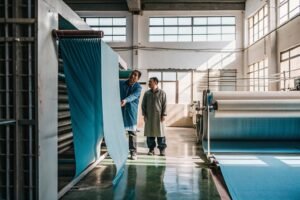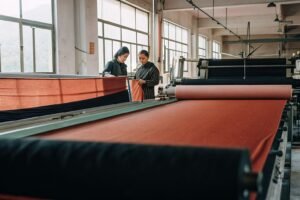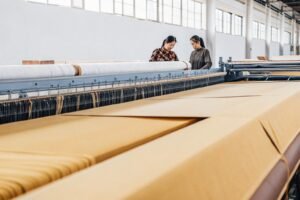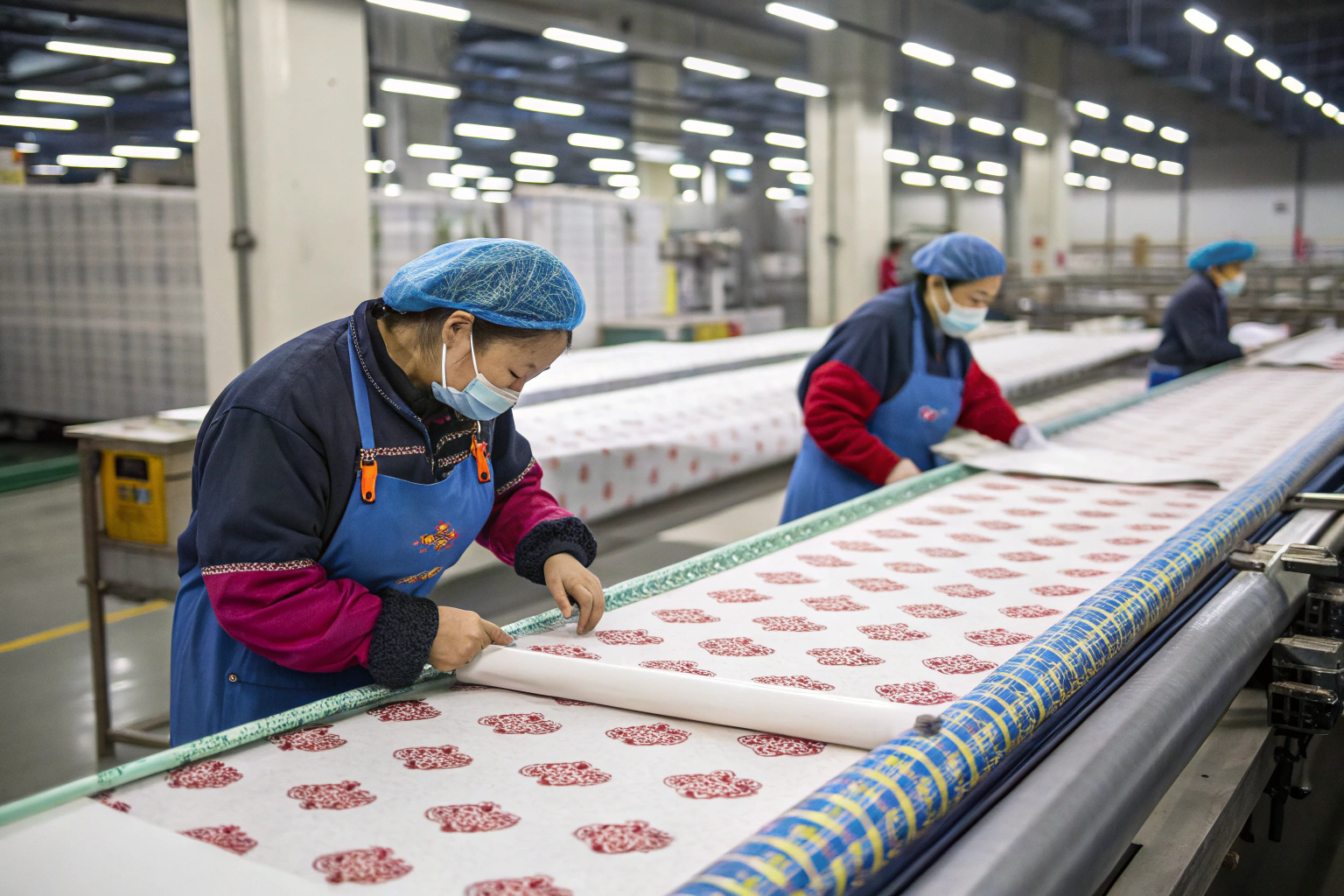
When you source fabrics from China, you’re not just buying material—you’re buying the collective skill and awareness of hundreds of workers. The difference between a fabric that passes CMIA and one that fails often happens long before it reaches the testing lab. It happens on the dyeing floor when a worker selects an auxiliary chemical, in the printing shop when they mix ink, and in the warehouse when they handle certified versus uncertified rolls. The question isn’t just "Is your factory certified?" but "Are your people trained to maintain that certification every single day?"
At Shanghai Fumao, we believe compliance is a culture, not just a certificate. CMIA standards are woven into the daily workflow of every operator, technician, and QC inspector. Our training programs are designed to transform complex chemical regulations into simple, actionable procedures that prevent failures at the source. For buyers who’ve experienced the frustration of a failed shipment due to a "simple mistake," this operational discipline is what separates a reliable partner from a risky vendor. Let me pull back the curtain on exactly how we build and maintain this compliance-first mindset across our production chain.
How Do We Train Production Staff on Chemical Safety Protocols?
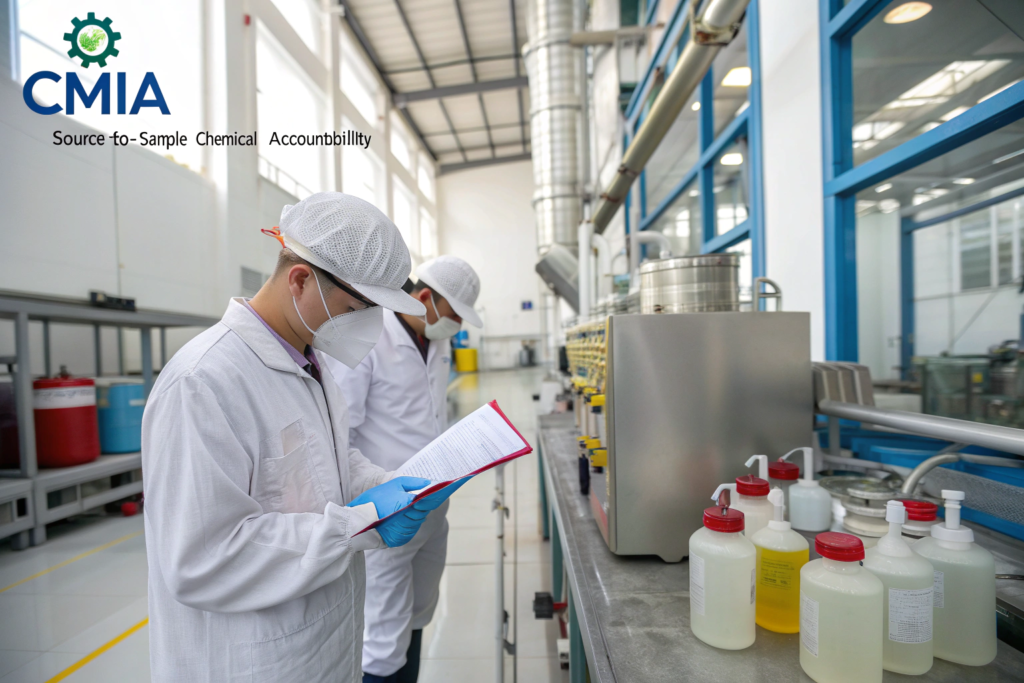
Chemical management is the frontline of CMIA compliance. A single unapproved softener or the wrong dye fixative can cause formaldehyde exceedance or introduce restricted substances. Our training starts here, with a program we call "Source-to-Sample" chemical accountability.
Every new production worker, whether in weaving, dyeing, or finishing, undergoes a mandatory 8-hour foundational course. This isn’t theoretical—it’s intensely practical. Trainees learn to identify our approved chemical color-coding system: green labels for CMIA-pre-approved auxiliaries, red labels for restricted substances that are banned from children’s wear production lines, and yellow for materials requiring special handling. They’re trained to never, under any production pressure, substitute a green-label product with a non-coded one, even if they look similar. This system was developed after a 2022 incident where a night-shift dyeing operator used a non-approved fixing agent to speed up a process, causing the entire batch of baby cotton rib knit to fail pH testing. The result was not just a loss of fabric, but a complete redesign of our training to emphasize visual controls and consequence understanding.
Furthermore, machine operators receive specific "Parameter Control" training. For instance, dyeing technicians learn that maintaining a precise temperature and time profile during the washing process is critical for achieving consistent pH levels. They’re taught to treat these parameters as non-negotiable, with real-time digital monitoring and manual log sheets as dual verification. This granular focus turns abstract CMIA limits into concrete machine settings.
What is the "Golden Sample" Reference System?
Creating a Physical Standard for Every Style.
Beyond chemicals, workers are trained on our "Golden Sample" system. For every new fabric style that passes CMIA certification, we create a physical "Golden Sample" sealed in a clear, labeled bag. This sample includes not just the fabric but tags listing its exact dye recipe, finishing chemical codes, and critical process parameters. This sample is kept at each relevant workstation—dyeing, finishing, QC. Before starting a new batch, supervisors are trained to cross-check the setup against the Golden Sample instructions. This tactile, visual system prevents drift in production recipes, which is a common cause of batch-to-batch compliance failure. It embeds the certified standard directly into the production floor’s daily reality.
How Do We Handle Training for Subcontracted Processes?
Extending Our Standards Beyond Our Walls.
For specialized processes like printing or coating that we subcontract to partner factories, training doesn’t stop at our gate. We mandate that our partner facilities assign a "CMIA Liaison" who completes our full chemical safety training. We also conduct unannounced audits where our QC manager will quiz operators on the floor about chemical codes and procedures. In one case last year, this audit at an embroidery partner revealed they were using a non-compliant backing adhesive. We halted production, provided on-site retraining, and switched them to a pre-approved adhesive from our list. This level of control ensures our supply chain integrity for certified textile production is seamless.
What Specialized Training Do QC and Lab Technicians Receive?
If production staff are the preventers, our Quality Control (QC) and laboratory technicians are the detectives and final gatekeepers. Their training is more analytical, focused on detection, verification, and forensic problem-solving.
All QC inspectors undergo a rigorous 40-hour "CMIA Focus Inspection" course. They are trained to look beyond common defects like holes or stains, and to identify visual clues of potential compliance issues. For example, they learn that an unnatural, overly shiny finish on a cotton fabric might indicate the use of a non-compliant silicone softener that could affect safety tests. They are trained to use portable testing kits for immediate spot-checks on the production floor—like pH test strips for a quick read on fabric neutrality after washing. Most importantly, they are empowered to "Stop the Line" if they suspect a compliance breach, triggering an immediate investigation by the lab team. This authority is critical; it places safety above output speed.
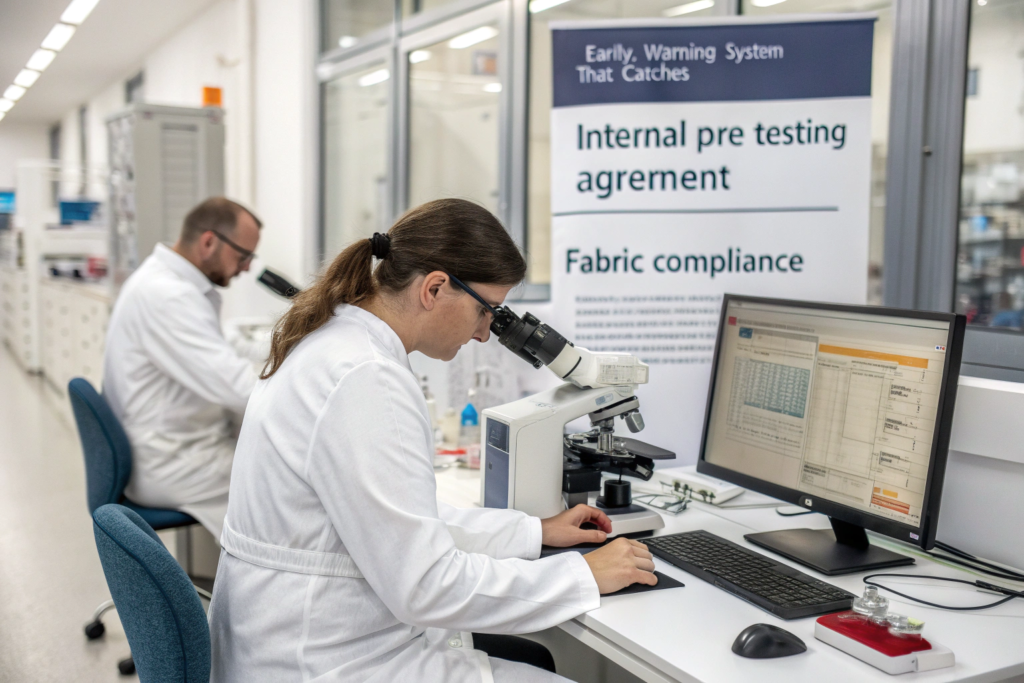
Our CNAS-accredited lab technicians receive even deeper training. They are not just taught how to run tests, but how to interpret results in context. For instance, if a pre-shipment test shows a slight upward creep in formaldehyde levels compared to the Golden Sample’s baseline, they are trained to investigate upstream: Was there a new batch of dye? Was the curing oven temperature fluctuating? This diagnostic skill turns the lab from a pass/fail station into an early warning system. This expertise is why our internal pre-testing agreement for fabric compliance catches over 99% of potential issues before official certification submissions.
How is Data Management and Traceability Taught?
Linking Every Meter to Its Compliance Data.
A key part of technician training is mastering our Digital Compliance Trail system. Every fabric roll we produce is assigned a unique QR code. Technicians and warehouse staff are trained to scan this code at every stage—after dyeing, after finishing, at final inspection. This scan logs the operator, time, and process parameters. The training emphasizes that this digital trail is not bureaucratic paperwork; it’s the forensic record that allows us to trace any non-conformity back to its root cause within minutes. For a buyer, this means if ever there is a question, we can provide not just a certificate, but the entire production history of that specific roll. This level of traceability is now a standard expectation in high-trust textile sourcing partnerships.
What is the "Mystery Audit" Training Method?
Keeping Vigilance High.
Complacency is the enemy of consistent compliance. To combat this, our training manager conducts quarterly "Mystery Audits." A small, intentionally non-compliant sample (e.g., a fabric swatch with a known pH issue) is introduced into the QC line. The auditor observes whether the inspector catches it using the correct procedure. These audits are not for punishment, but for continuous calibration. The results are used in monthly refresher training sessions to address any gaps in attention or methodology. This proactive approach ensures our team’s skills remain sharp, directly contributing to our 98.5% client pass rate on third-party inspections.
How Do We Ensure Continuous Training and Knowledge Updates?
CMIA standards and global regulations evolve. A training program that isn’t updated is a failing program. We’ve institutionalized continuous learning through a multi-channel system that keeps compliance at the forefront of daily operations.
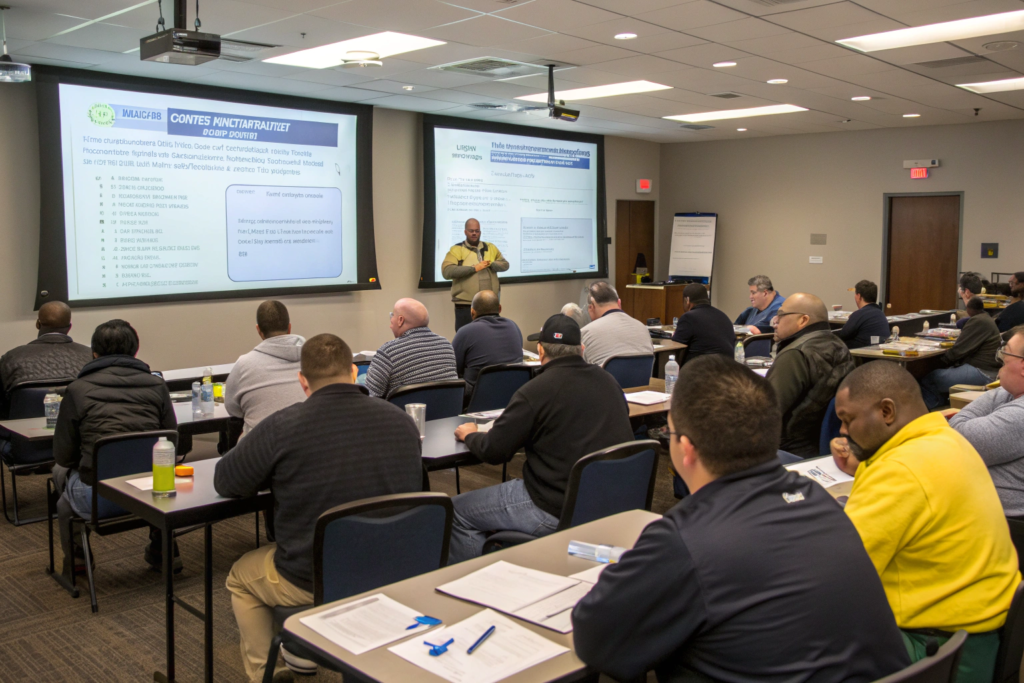
First, we hold mandatory monthly "Compliance Briefings" for all staff. These 30-minute sessions, led by our technical director, cover one focused topic: a recent regulation update, a case study of a failure (often anonymized from the industry), or a deep dive on a specific substance like phthalates. These are interactive—workers are encouraged to share challenges from the floor. For example, a briefing on phthalate restrictions in plastic components led a printing operator to question the safety of a new transfer film a supplier was promoting, which upon testing, did indeed contain non-compliant plasticizers. This culture of questioning is actively trained and rewarded.
Second, we operate a "Train-the-Trainer" model. Each production team has a designated "Compliance Captain"—a senior worker who receives advanced training and is responsible for daily peer coaching and monitoring. These captains meet weekly to share insights and challenges, creating a network of embedded experts. This decentralizes expertise and ensures knowledge transfer happens in real-time, on the shop floor, in the workers’ native language.
How Do We Integrate Buyer Feedback into Training?
Learning from Every Order.
Every client project, especially those with unique compliance requirements, becomes a training opportunity. After completing an order for a German brand requiring exceptional colorfastness to saliva for baby teethers, we integrated their specific test method and pass/fail criteria into our standard training modules for relevant staff. When a US client’s third-party inspection identified a packaging mix-up risk, we created a new training module on warehouse segregation procedures for certified vs. non-certified rolls. This feedback loop ensures our training remains practical, relevant, and aligned with the real-world demands of the global market. It’s a core part of our philosophy of collaborative quality improvement.
What Certifications Do Our Trainers and Leaders Hold?
Professionalizing the Training Function.
Our training effectiveness starts with qualified trainers. Our Technical Director and QC Manager hold professional certifications such as the "Textile Chemical Safety Manager" from Chinese industry associations and have completed courses on international standards like OEKO-TEX and REACH. This ensures that our internal training is not insular but is benchmarked against global best practices. We invest in sending key personnel to annual industry symposiums on regulatory updates, and they are required to disseminate that knowledge internally within two weeks.
Conclusion
The training our workers receive for CMIA compliance is extensive, practical, and continuous. It moves far beyond a one-time seminar to create an ingrained culture where every team member, from the warehouse to the lab, understands their role in guaranteeing fabric safety. This human infrastructure—the skilled operators, vigilant inspectors, and diagnostic technicians—is what truly upholds the promise of the CMIA certificate we deliver to you.
For buyers tired of unpredictable quality and compliance surprises, partnering with a supplier that invests deeply in its people is the most strategic decision you can make. It transforms compliance from a hoped-for outcome into a manufactured result.
If you seek a fabric partner where CMIA compliance is embedded in the daily actions of a trained workforce, not just framed on the office wall, let’s connect. See the difference that operational discipline makes.
To discuss how our trained teams can bring reliability and compliance confidence to your next fabric order, contact our Business Director Elaine at elaine@fumaoclothing.com. We’re ready to show you the people and processes behind our promise.