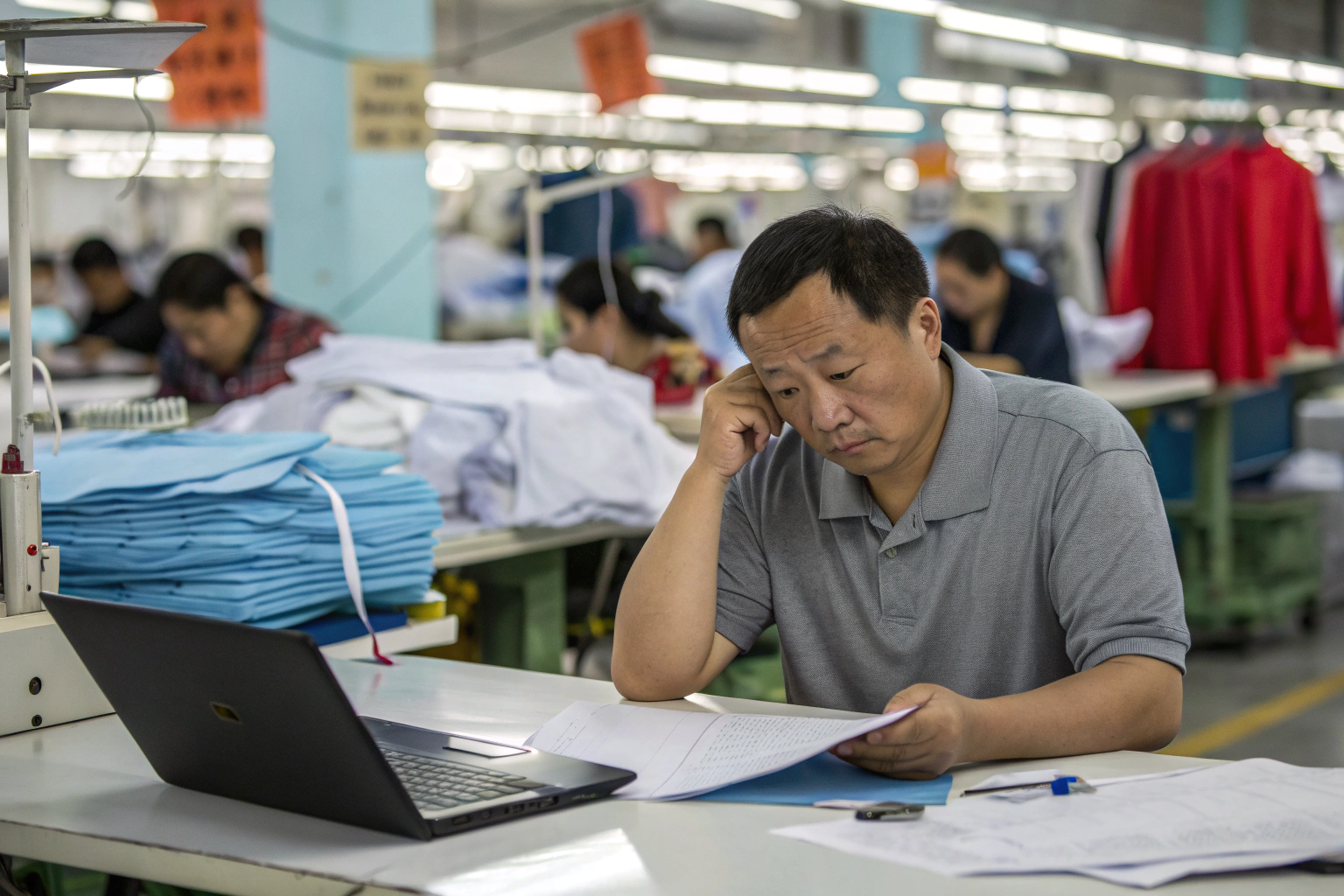
Let’s be brutally honest about apparel manufacturing. You’re squeezed between rising fabric costs, buyer pressure on prices, and your own need to make a profit. When someone suggests investing in something like CMIA certification, your first thought is, "That sounds like another cost that will eat my margin." I’ve had this exact conversation with factory owners for years. But here’s the counterintuitive truth that the most successful manufacturers have discovered: CMIA certification isn’t a cost center; it’s a profit center. It systematically improves your apparel profit margin by attacking the hidden waste and inefficiency that you’ve likely accepted as "the cost of doing business." It doesn’t just make you greener; it makes you leaner, more reliable, and more valuable to the right clients.
Think of your factory like a car with a hidden fuel leak. You keep paying for gas (materials, energy), but you’re not getting the full distance. You might even think your fuel efficiency is normal because you’ve never measured it properly. CMIA certification is the diagnostic scan that finds that leak—and then forces you to fix it. The "savings" from the fix go straight to your bottom line. More importantly, the discipline of the system prevents new leaks from forming. For a factory owner, this translates directly to higher Gross Profit Margin (GPM) and more stable Net Profit. Let’s break down the exact financial mechanics.
The Direct Margin Boost: Slashing Variable Costs
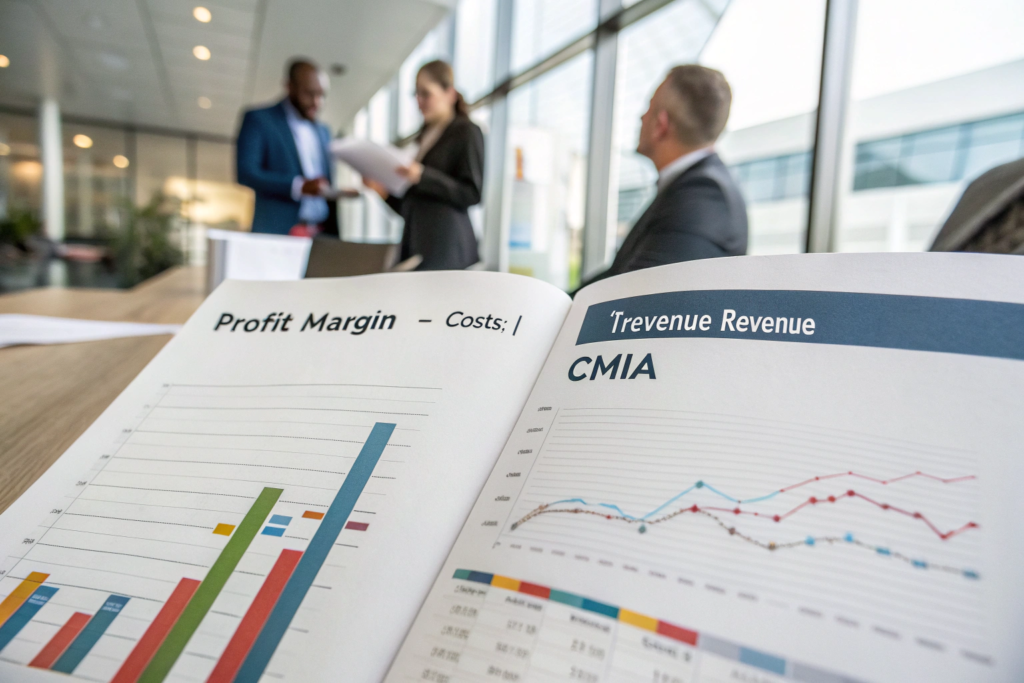
Profit Margin = (Revenue – Costs) / Revenue. The most direct way CMIA improves margin is by reducing your variable costs per unit produced. It does this by mandating measurement and improvement in the areas where money literally leaks away.
1. Material Cost Reduction (The Biggest Lever):
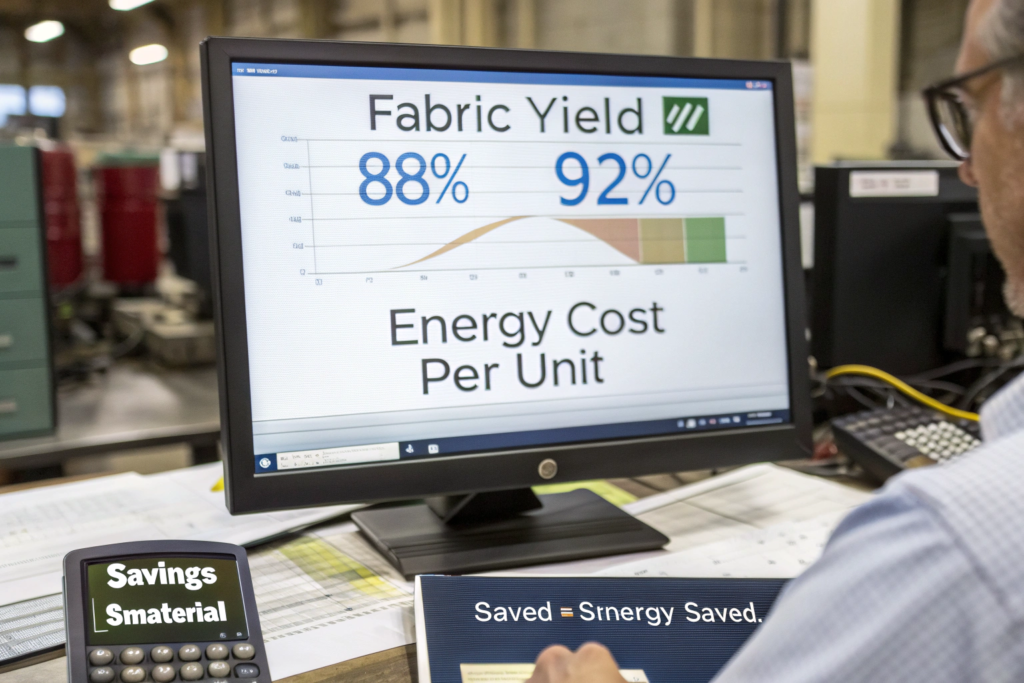
Fabric can be 50-70% of your garment’s cost. Waste is pure profit loss. CMIA requires you to set objectives to reduce waste. To do that, you must first measure your fabric utilization rate. Most factories guess; CMIA forces you to know.
- Action: Implement fabric cutting optimization software and track marker efficiency.
- Result: A typical improvement of 3-8% in fabric yield. For a factory using $1,000,000 of fabric annually, an 5% saving is $50,000 of pure, additional gross profit. This alone can pay for the entire certification investment in the first year.
2. Energy & Utility Cost Reduction (The Silent Profit Drain):
Electricity for sewing lines, gas for boilers and irons, water for dyeing—these are massive, often poorly tracked expenses. CMIA requires sub-metering and tracking of energy/water per unit.
- Action: Identify and fix compressed air leaks, switch to LED lighting, optimize boiler settings, recover heat from processes.
- Result: Consistent savings of 10-20% on utility bills. A factory with a $120,000 annual energy bill saving 15% adds $18,000 directly to net profit. These savings are recurring, year after year.
3. Defect & Rework Cost Reduction (The Hidden Factory):
Every garment that fails QC and needs rework costs you twice: the labor to make it wrong and the labor to fix it. A CMIA-driven focus on process control (standardized work, machine maintenance) drastically reduces variability.
- Result: Reducing your defect rate from 4% to 2% effectively increases your productive capacity by 2% without adding machines or labor. This means more sellable output from the same input costs, directly improving your margin on every order.
A Real Case: The Woven Shirt Factory in Vietnam
A partner factory producing men’s dress shirts pursued CMIA in 2022. In the first 18 months post-certification, their internal data showed:
- Fabric waste reduced from 12% to 9% (3% saving on material cost).
- Electricity consumption per dozen shirts dropped by 18%.
- First-pass quality yield improved from 91% to 95%.
Their overall cost per dozen shirts decreased by 8.5%. They didn’t lower their prices to customers. That 8.5% flowed directly to their pre-tax profit margin. The certification cost was recouped in under 10 months through these operational savings alone.
The Financial Translation
These aren’t "soft" benefits. They are hard, quantifiable line items on your P&L statement. CMIA turns your factory from a cost-plus operation into an efficiency-driven profit engine.
The Premium Pricing Power: Commanding a Higher Price Point
Cost reduction is one side of the margin equation. The other, often more powerful side is revenue enhancement. CMIA certification allows you to move out of the cut-throat, commoditized bidding wars and into a market segment where buyers value reliability and sustainability—and are willing to pay for it.
1. The Brand & Retailer Mandate:
Major brands and retailers in North America and Europe are under immense pressure to clean up their supply chains. They have public sustainability goals and need partners who can provide verified data. For them, a CMIA-certified factory is de-risking their supply chain. They will often pay a 3-8% price premium to work with such a partner because it reduces their own compliance risk and supports their marketing claims.
2. Securing Longer-Term, Higher-Volume Contracts:
These buyers don’t just pay more per piece; they offer framework agreements or annual contracts. This replaces the volatility of seasonal spot orders with predictable, planned production. Predictable revenue at a higher margin is a game-changer for factory financial planning and stability. It allows for better investment in equipment and workforce.
3. Becoming a "Partner," Not a "Vendor":
When you are a certified, data-providing partner, the conversation shifts. You’re not just asked for a quote; you’re involved in product development discussions. This strategic position protects you from being easily replaced by a cheaper competitor and often comes with more favorable payment terms.
The Math of Premium Pricing:
Assume your standard FOB price for a polo shirt is $5.00/unit at a 15% net margin ($0.75 profit).
- A CMIA-certified competitor might command $5.30/unit (+6%) from a premium brand.
- Their internal efficiency saves them $0.20/unit in costs (4% saving from waste/energy).
- Their new cost base is $4.80/unit ($5.00 – $0.20).
- Their profit per unit becomes $5.30 – $4.80 = $0.50.
Wait, that’s less? No—look at the percentage. Their profit increased from $0.75 to $1.50? Let’s recalculate carefully: - Old Scenario: Price $5.00, Cost $4.25, Profit $0.75 (15% margin).
- New Scenario: Price $5.30, Cost $4.05 ($4.25 – $0.20 efficiency saving), Profit $1.25.
That’s a 66% increase in profit per unit ($0.75 to $1.25) and a rise in net margin from 15% to over 23%.
How to Realize This Premium
You must market it. Don’t just add the CMIA badge to your website. Train your sales team to sell the value: "We are a CMIA-certified partner, which means we provide data on the carbon and resource footprint of your order, ensure superior process control for quality, and can support your corporate sustainability reporting." This resonates with the right buyers.
The Hidden Margin Protectors: Risk Reduction & Operational Resilience
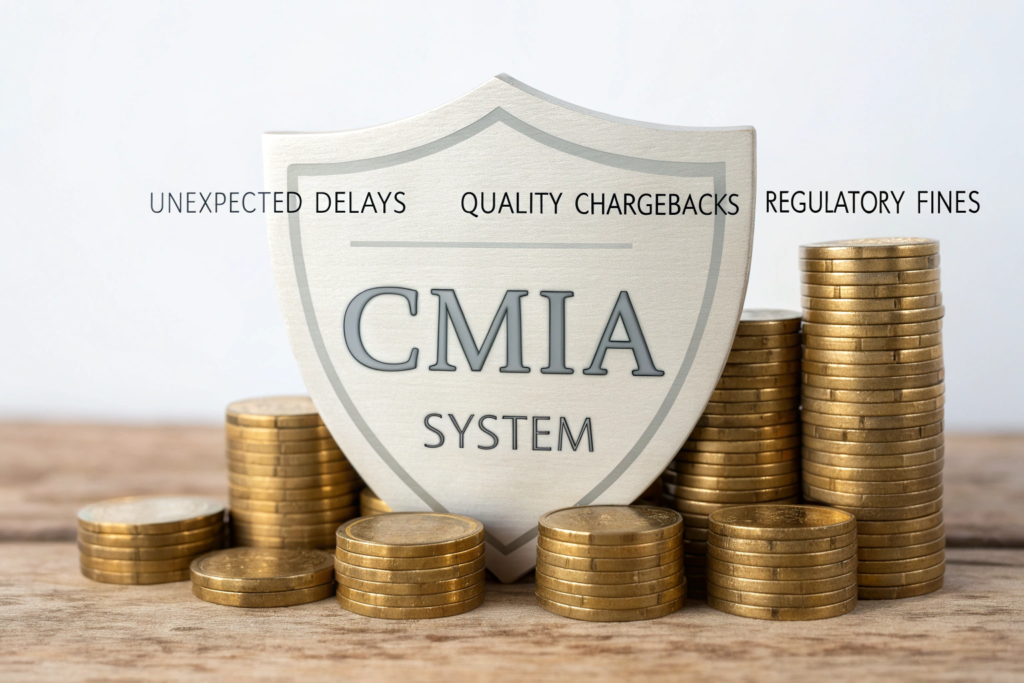
Margin isn’t just about numbers on a P&L; it’s about not losing money unexpectedly. CMIA certification builds a system that protects your margin from erosion through unforeseen events.
1. Preventing Costly Delays & Expedited Freight:
A CMIA factory’s preventive maintenance and production planning systems minimize unplanned downtime. For a DDP order, a delay you cause can force you to pay for air freight, wiping out the profit of an entire container. CMIA’s process discipline is insurance against this.
2. Avoiding Quality Failures & Customer Chargebacks:
Under strict terms (like DDP or with powerful retailers), quality failures can result in hefty chargebacks, discounts, or full returns. The process control inherent in a CMIA system reduces the probability of bulk quality defects, protecting your revenue from these clawbacks.
3. Reducing Staff Turnover & Training Costs:
A well-organized, clean, and systematically managed factory is a better place to work. Lower turnover means lower recruitment and training costs, and a more experienced, productive workforce. This improves your overall labor efficiency, a key cost factor.
4. Future-Proofing Against Regulatory Fines:
As carbon taxes (like CBAM) and chemical regulations tighten, non-compliant factories will face indirect costs or lost business. Your CMIA system ensures you are already measuring and managing these aspects, avoiding future surprise costs that would crush margin.

The Cost of Not Having a System
One major quality recall, one catastrophic delay leading to canceled orders, or one lost key client due to non-compliance can erase a year’s worth of profit. CMIA is a systematic approach to preventing these low-probability, high-impact margin destroyers.
Building a Financially Sustainable Business
Investors and banks look favorably on businesses with certified management systems. They see lower operational risk. This can lead to better financing terms (lower interest rates on loans), which directly improves your net profit through lower financial expenses.
Implementing for Profit: A Phased Financial Approach
The fear of upfront cost is the biggest barrier. To overcome this, view CMIA implementation as a phased investment with a clear ROI at each step. Don’t try to do everything at once.
Phase 1: The Profit Diagnostic (Months 1-3)
- Action: Hire a consultant to conduct a gap analysis focused on identifying quick-win savings.
- Cost: ~$2,000 – $5,000.
- Immediate ROI Target: The consultant’s report will pinpoint areas like lighting or compressed air leaks. Fixing these should save enough in 6-12 months to pay for this phase and the next. For example, a $3,000 investment in LED lights might save $4,000 in electricity in the first year.
Phase 2: System & Measurement (Months 4-9)
- Action: Implement core measurement systems: fabric tracking, basic energy sub-metering, and document control.
- Cost: Consultant fees + internal time + minor equipment ($10,000 – $20,000 total).
- ROI Target: The act of measuring fabric yield alone, with focused improvement, should yield 2-3% savings. On $500,000 of fabric, that’s $10,000-$15,000 annualized profit improvement, paying for this phase.
Phase 3: Certification & Premium Marketing (Months 10-12)
- Action: Undergo the certification audit and launch a renewed sales strategy targeting premium buyers.
- Cost: Certification body audit fees ($8,000-$12,000).
- ROI Target: Secure one new client or contract at a 5% premium. This premium on a $200,000 order is $10,000 of additional profit, covering the audit cost.
By the end of Year 1, the system should be cash flow positive from operational savings alone. In Year 2, the premium pricing and new business become the primary profit drivers.
How Partners Like Shanghai Fumao Support This Journey
We see our role as profit enablers. When you use our fabrics, we provide precise technical data that feeds directly into your yield optimization software. We can connect you with reputable consultants. Most importantly, we send our fabric to factories we know are efficient and reliable—like CMIA-certified ones—which reduces waste and quality issues from the start, protecting both our margin and yours.
Conclusion
CMIA certification improves your apparel profit margin through a powerful one-two punch: 1) It systematically reduces your cost of production by eliminating waste in materials, energy, and labor. 2) It enables you to command a higher price from buyers who value verified sustainability and operational excellence.
This is not a theoretical benefit. It is a documented, measurable transformation that turns environmental management into financial performance. The factory that views CMIA as a cost will be outmaneuvered by the factory that sees it as an investment in profitability and resilience.
In an industry where margins are perpetually squeezed, CMIA provides a clear, structured path to doing better business—not just feeling better about it. The question is no longer "Can I afford to get CMIA certified?" The real question is, "Can I afford not to, given the profit I’m leaving on the table and the clients I’m missing?"
If you’re ready to stop leaking profit and start building a more profitable, future-proof factory, the journey begins with measurement. Contact us at Shanghai Fumao. We can help you connect with the resources and partners to start this transformation. Speak with our Business Director, Elaine, at elaine@fumaoclothing.com. Let’s discuss how to weave higher margins into the very fabric of your operations.