You’ve placed an order. The production is complete. The goods are packed and ready to ship. But now, your buyer—a major retailer in Europe or a conscious consumer brand in the US—is asking for the CMIA certification documents for this shipment. And you don’t have them. The factory isn’t certified. Your stomach drops. This isn’t a hypothetical scenario; it’s happening right now to importers and brands every single day. Let’s cut through the anxiety and talk about the real, practical, and financial consequences. A garment shipment that lacks required CMIA certification isn’t just "less sustainable." It is, in today’s market, a potentially non-compliant, high-risk cargo that can trigger a chain reaction of costly problems. The fallout depends entirely on who your customer is and what they’ve promised their own market.
Think of CMIA certification like a visa for your shipment to enter certain markets or customer accounts. Without the right visa, you might be denied entry, put into lengthy administrative processing, or sent back. For some low-value, generic goods sold on open marketplaces, no one asks for a visa. But for brands selling into modern retail channels or direct to informed consumers, that visa is becoming mandatory. So, what actually happens? The consequences range from annoying delays to complete commercial collapse. Let’s map out the scenarios so you can understand—and avoid—the real cost of shipping without this key document.
Scenario 1: The Direct Order Stoppage & Contractual Breach
This is the most immediate and severe outcome. It occurs when CMIA certification was a contractual requirement between you and your buyer. This is increasingly common in supply agreements with larger brands, retailers, and corporate buyers who have public ESG (Environmental, Social, and Governance) commitments.
What Happens:
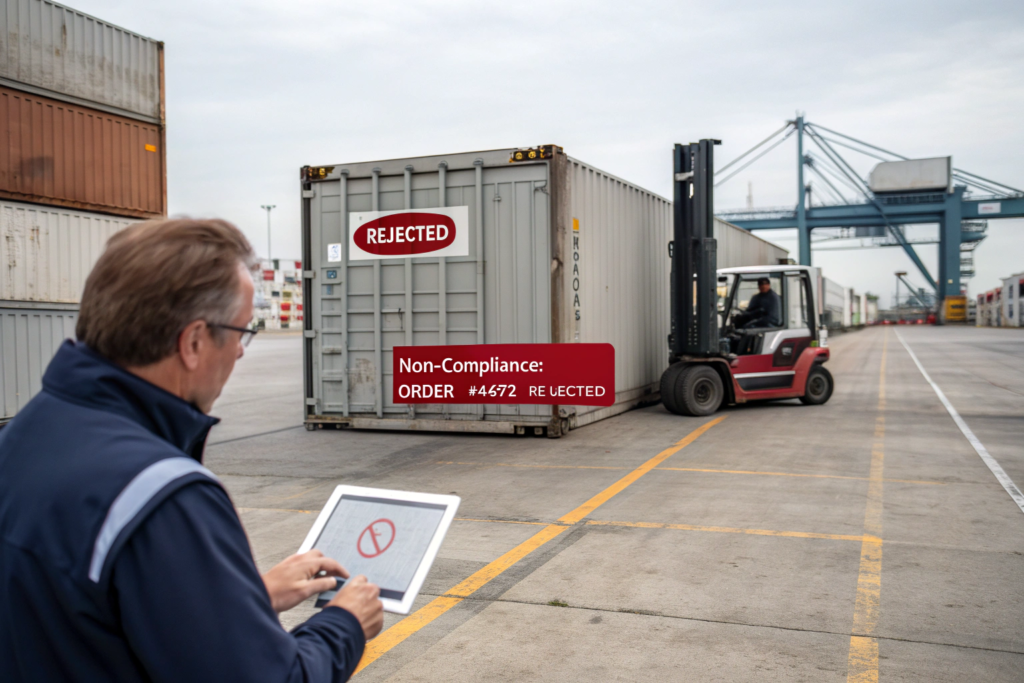
- The Shipment is Rejected at Destination: Your buyer’s QC or compliance team refuses to accept the goods. The container sits at their warehouse or a third-party logistics (3PL) facility, accruing demurrage and detention charges daily (often $100-$300 per day).
- You Are in Breach of Contract: The purchase order or master supply agreement likely has a clause specifying required certifications. Failing to provide them is a breach. This gives the buyer the right to reject the goods, cancel the order, and even seek damages.
- Remediation is Costly & Slow: You now have a stranded shipment. Your options are terrible:
- Negotiate a Discount: Plead with the buyer to accept the goods at a steep discount (20-50%) to compensate for their "non-compliant" status. This destroys your margin.
- Reroute or Return: Pay to ship the goods elsewhere or back to origin, incurring double freight, more fees, and dealing with returned inventory.
- Scramble for Retroactive Certification: Impossible. Certification is for the factory’s processes, not a specific shipment. You can’t certify past production.
A Real Case from 2023: An importer in the UK had an order for 20,000 polo shirts with a high-street retailer. The order was placed with a factory the importer had used for years. Unbeknownst to the importer, the retailer had updated its vendor manual that year to require CMIA or equivalent for all new orders. The shipment arrived, the documents were requested, and could not be provided. The retailer rejected the entire container. The importer was forced to sell the goods to a discount channel at a 40% loss and lost the retailer as a client permanently. The cost of the crisis far exceeded what it would have cost to switch to a certified factory in the first place.

The Financial Math of Rejection
Calculate: Loss of goods value + Demurrage fees + Return freight + Lost future business vs. The cost premium of sourcing from a CMIA-certified factory. In almost every case, prevention is exponentially cheaper.
How to Avoid This
Always, always get the buyer’s formal certification requirements in writing before production starts. Don’t assume. Ask directly: "Do you require CMIA or any other environmental certification for this order?" If they say yes, factor it into your sourcing immediately.
Scenario 2: The Customs & Regulatory Quagmire
This scenario is emerging and will become dominant within the next 2-3 years. It involves government regulations, not just customer requirements. Laws like the EU’s Carbon Border Adjustment Mechanism (CBAM) and various Extended Producer Responsibility (EPR) schemes are creating a new landscape where environmental data is a customs declaration item.
What Happens Without CMIA in This Context:
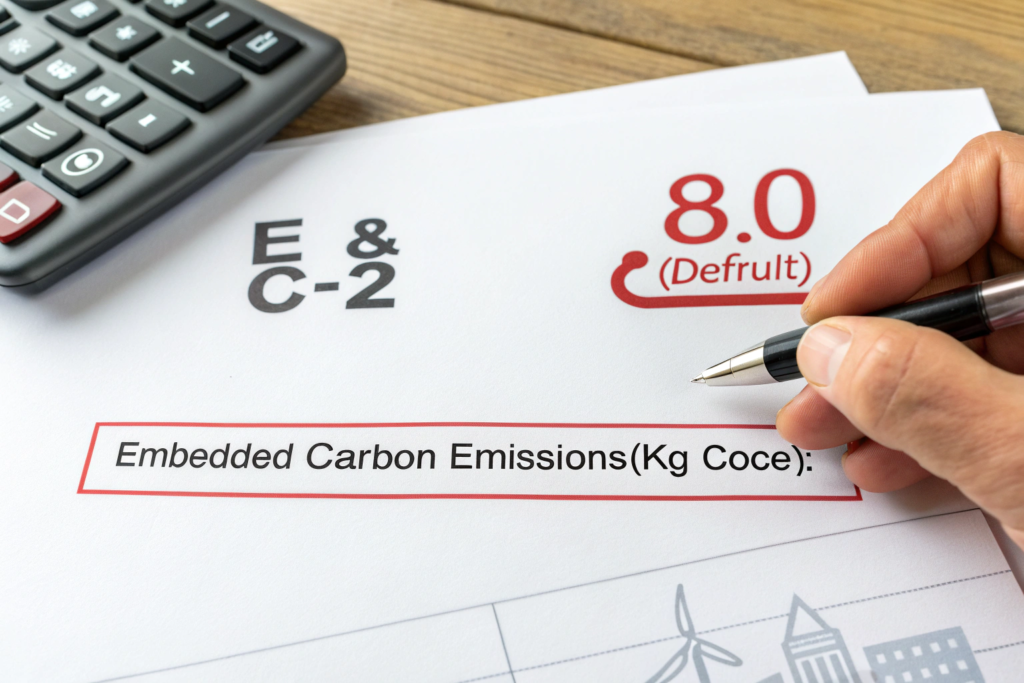
- Inability to Accurately Declare: Under CBAM, importers into the EU will need to declare the embedded carbon emissions of their goods. A non-CMIA factory does not have this data. You, as the importer, would have to use generic, default emission factors, which are typically much higher than actual efficient production. This leads to you overpaying the carbon tax, cutting directly into your profit.
- Increased Scrutiny & Delays: A shipment with incomplete or estimated environmental data is a red flag for customs algorithms. It is more likely to be selected for a documentary or physical inspection. This means clearance delays of days or weeks, more administrative costs, and potential storage fees.
- Risk of Penalties: Providing incorrect or misleading data on customs declarations can result in fines and penalties. While in its early stages, authorities will eventually enforce these requirements strictly.
Even without CBAM, a CMIA-certified factory’s disciplined documentation (chemical inventories, etc.) makes it easier to respond to customs inquiries about product safety or composition, speeding up clearance. Lacking this, you have less evidence to present, increasing risk.
The Proactive Advantage of Data
Imagine two importers bringing identical polyester jackets into the EU in 2026. Importer A has a CMIA-certified factory providing a verified carbon footprint of 5 kg CO2e per jacket. Importer B has no data and must use the EU’s default value of 8 kg CO2e. Importer B pays 60% more in carbon border taxes per jacket. That’s a direct, unavoidable cost disadvantage.
How to Prepare Now
Start building your supply chain with data-capable partners now. Ask your factories: "Can you provide carbon footprint data for my products?" A CMIA-certified partner will say yes and show you how. This is no longer just about ethics; it’s about future tariff and tax optimization.
Scenario 3: The Marketing & Sales Handicap
This is a slow-burn consequence that affects your brand’s growth and positioning. Your shipment gets to the customer, they accept it (maybe they didn’t explicitly require CMIA this time), but you are left with a product that has no verifiable environmental story in a market that increasingly demands one.
What Happens:
- You Cannot Make Credible Claims: You cannot say "responsibly made" or "low-carbon" on your hangtags, website, or to retailers. You are siloed in the generic, commodity product category where competition is fiercest and based almost solely on price.
- You Lose B2B Opportunities: When pitching to new retail accounts, you will fail their vendor sustainability questionnaires. Many boutiques and department stores now have pre-qualification filters. No certification often means no meeting.
- You Cede Premium Positioning: Consumers are willing to pay more for products with credible sustainability credentials. Without proof, you cannot command that premium price point, limiting your margins and brand value.
This scenario is about lost opportunity cost. You’re not facing a direct rejection today, but you are capping your brand’s potential and making it vulnerable to competitors who are certified.
The Storytelling Gap
In today’s market, a product needs a story. For a DTC brand, the story of "made in a CMIA-certified factory where we track and reduce impact" is powerful. For a private label selling to retailers, it’s a key differentiator. A shipment without this is just "stuff." It’s much harder to market, sell, and build loyalty around.
How to Turn This Around
If you have existing inventory from non-certified production, be transparent. Don’t make false claims. Use it as a baseline. Then, publicly commit to a change. "Our Fall ’24 collection marks our transition to CMIA-certified manufacturing. Here’s our plan." This turns a weakness into a narrative of improvement.
Scenario 4: The Internal Discovery & Audit Trail Failure
This scenario is about your own internal risk management. Perhaps you don’t have an external buyer demanding CMIA yet. But you are building a brand, and you want to ensure quality and consistency. A non-CMIA factory lacks the systematic documentation that is invaluable when things go wrong.
What Happens:
- Poor Problem Resolution: If there’s a quality failure (e.g., color bleeding, inconsistent sizing), a non-CMIA factory often cannot provide a systematic root-cause analysis. The response is "we’ll check the sewing" rather than providing data from dyeing logs, temperature charts, or cutting efficiency reports. This makes recurring problems likely.
- No Performance History: You cannot track the factory’s improvement over time on key metrics like defect rates or on-time delivery in a standardized way. Your sourcing decisions remain based on gut feeling and recent anecdotes.
- Weak Due Diligence: If you ever decide to seek investment or sell your business, investors will conduct deep supply chain due diligence. A portfolio of suppliers with no certified management systems will be seen as a high-risk liability, potentially lowering your company’s valuation.
The Value of a Paper Trail
A CMIA system creates a mandatory paper trail. When a fabric shipment from Shanghai Fumao arrives at a certified factory, its GRS certificate is logged. When that fabric is cut, the yield is recorded. This trail protects you. If a problem arises with a specific garment, you can trace it back through the system. Without it, you’re guessing.
The Proactive Step
Even without external pressure, start requesting key data points from your factories: defect rates, on-time-in-full (OTIF) performance, and any energy/water data they track. Their ability (or inability) to provide this easily will tell you a lot about their operational maturity and your associated risk.
Conclusion
The question "What happens if a shipment lacks CMIA certification?" has multiple answers, all of them bad. The consequences scale with the sophistication of your customer and the strictness of your target market. They can be immediate and financial (rejection, penalties), slow-burning and strategic (lost sales, stunted growth), or operational (poor quality control, no traceability).
In essence, lacking required CMIA certification turns your garment shipment from a compliant product into a liability. The "savings" from using a non-certified factory are illusory—they are merely deferred costs that will manifest later as discounts, fines, lost customers, or missed opportunities, often at a multiplier of the original "savings."
The prudent path is clear: Understand your customers’ and markets’ requirements. Proactively build your supply chain with partners who have verifiable management systems. The initial investment in sourcing from CMIA-certified factories is, in reality, the cost of securing your market access, protecting your profit margins, and future-proofing your business.
Don’t wait for a crisis to reveal the gap in your supply chain. If you are building a brand for the future, CMIA compliance isn’t an option; it’s a foundational element of modern, responsible commerce. To discuss how to transition your sourcing to certified, low-risk partners, contact Shanghai Fumao. Our network includes mills and factories committed to transparency. Reach our Business Director, Elaine, at elaine@fumaoclothing.com. Let’s ensure your next shipment is a success, not a statistic.