You’ve sketched out a beautiful new children’s clothing line. The designs are perfect, the market is ready. You get quotes from several factories, and there’s a noticeable spread in pricing. One factory, promising full CMIA certification, comes in 10-15% higher. Your first instinct might be to question that premium. "Is this just an upcharge? Can I skip it to hit my target margin?" As someone who’s been on the factory side of this conversation for over 20 years, I can tell you that cost difference isn’t a markup—it’s an investment. And skipping it is the most expensive decision you could make. Let’s break down exactly where that money goes and why it’s not a cost, but a value transfer that protects your entire business.
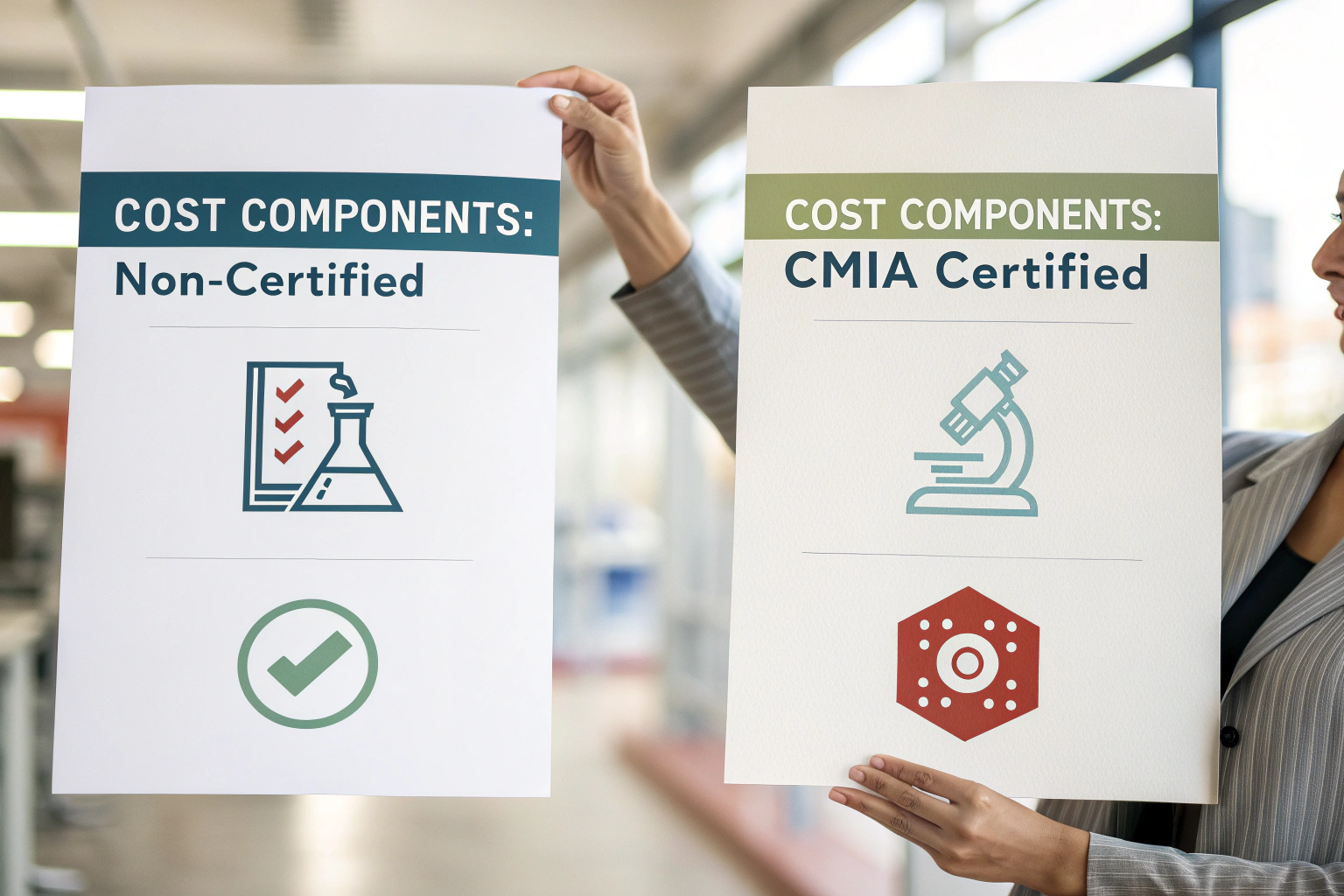
CMIA certification directly affects your custom clothing cost by adding layers of mandatory, verifiable quality control, specialized material sourcing, and third-party validation that non-certified production avoids. This translates to higher costs for certified raw materials, laboratory testing fees, and internal quality management overhead. However, this upfront cost is fundamentally a risk mitigation investment. It systematically eliminates the far greater hidden costs of recalls, liability lawsuits, and brand damage that can arise from unsafe products. In essence, you are pre-paying a known, manageable premium to insure against a catastrophic, unknown loss.
Think of it as building a house. You can use uncertified, cheaper electrical wiring to save money, or you can pay more for certified, inspected wiring that won’t cause a fire. The house looks the same from the outside, but the cost difference reflects the safety engineered into the walls. Let’s open up the "walls" of your clothing order to see what you’re really paying for.
The Direct, Line-Item Costs of CMIA Compliance
When we quote for a CMIA-certified order, we’re not adding a vague "certification fee." We are costing out specific, required activities and materials that have a tangible price. These are not optional; they are the blueprint for safety.

1. Premium for Certified Raw Materials
The journey begins with your fabric and components. CMIA-compliant cotton isn’t just "cotton." It’s cotton from a mill that can provide a full material composition sheet and batch test reports proving the absence of restricted substances like formaldehyde or heavy metals in the dyes. These mills often have better wastewater treatment and process controls, which cost more.
-
Real Example: In Q1 2024, we sourced organic cotton interlock for a Swedish brand. The CMIA-compliant, pre-tested fabric was ¥42/meter. A visually identical, non-certified fabric from a smaller mill was ¥35/meter. The ¥7 difference paid for the mill’s testing, traceability systems, and safer dyeing processes. This is the reality of sourcing eco-friendly and certified textiles within a budget.
-
Trims and Accessories: Every button, zipper, drawstring, and print ink must also be certified. We maintain an Approved Vendor List (AVL) of CMIA-compliant trim suppliers. Their products are 10-30% more expensive than uncertified equivalents because they undergo the same rigorous testing. Using a non-AVL button to save $0.02 could invalidate the entire certification and introduce a choking hazard.
2. Laboratory Testing Fees: The Non-Negotiable Proof
This is the most visible direct cost. Testing isn’t a one-time event; it’s a process:
- Pre-Production Testing (Lab Dips): Testing the approved fabric swatch for colorfastness and chemical content. (~$150-$300 per color)
- Component Testing: Testing buttons, zippers, etc., for physical safety (pull force) and chemical safety. (~$50-$150 per component type)
- Final Production Batch Testing: The most comprehensive test. Multiple finished garments from the production batch are sent to an accredited lab (like SGS, ITS, or our CNAS-accredited partner) for the full CMIA battery. (~$800-$1,500 per style, depending on complexity)
For a custom order with 3 colors and 2 new button types, testing can easily add $2,000 – $3,500 to the project cost. This is not profit for the factory; it’s a direct pass-through to the lab. We provide all reports transparently. Understanding third-party lab testing cost structures for apparel compliance is key to budgeting accurately.
The Indirect Costs: Investment in Systems and Expertise
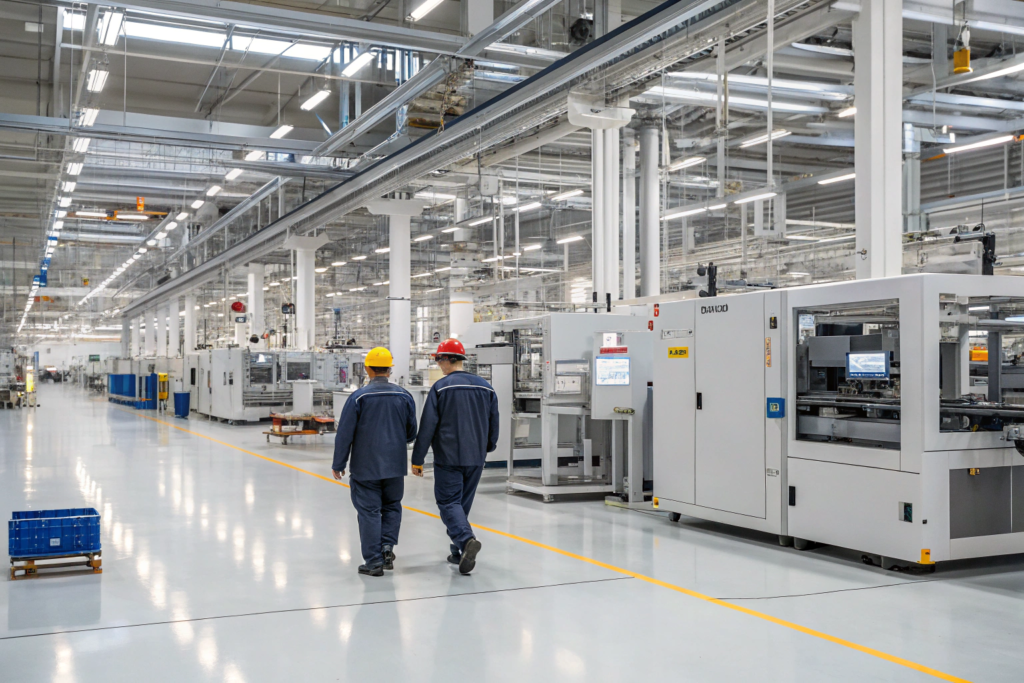
Beyond the invoiceable items, a factory capable of reliable CMIA certification has invested heavily in systems and people. This operational overhead is factored into the price but delivers immense long-term value.
1. Quality Management System (QMS) Overhead
A true CMIA-certified supplier doesn’t just test at the end; they build safety into the process. This requires:
- Dedicated Compliance Staff: Salaries for QC managers who understand CMIA standards and manage the testing logistics.
- Digital Tracking Systems: Software to track material LOT codes from fabric roll to finished garment. This traceability is crucial for recalls but adds IT and administrative costs.
- Internal Audit Processes: Regular checks to ensure every step of production adheres to the safety protocol.
At Shanghai Fumao, we developed a digital QMS after obtaining our certification. It added about 3% to our operational overhead, but it reduced production errors by 15% and gave clients real-time visibility. This systemic reliability is what you’re partially funding.
2. The Cost of Rejection and Lower Yields
In non-certified production, a slight color variation or a minor chemical overshoot might be overlooked. In CMIA production, there is zero tolerance. If a fabric batch fails the formaldehyde test, the entire batch is rejected. If buttons fail the pull test, they are scrapped.
This means a CMIA-certified factory must work with higher safety margins and more conservative processes, which can lead to slightly lower yields (more wasted material to ensure consistency) and the financial risk of absorbing the cost of failed materials. We factor this risk buffer into our pricing. It’s the cost of saying "no" to anything substandard, which directly protects you.
The Cost-Benefit Analysis: Why the Premium is an Investment
Now, let’s flip the perspective. Instead of viewing the CMIA cost as an expense, view it as an insurance premium with a guaranteed return on investment (ROI) in risk avoidance.

The "Hidden Invoice" of Non-Certified Production
What does the cheaper, non-CMIA quote not include? It externalizes massive risk onto you, the brand:
- Recall Costs: Logistics, shipping, destruction, refunds. A single recall can cost 50-100x the entire testing budget for a season.
- Liability Lawsuits: Legal fees, settlements, and jury awards in cases of child injury can reach millions.
- Brand Destruction: Loss of consumer trust, negative media, and retailer delisting can sink a brand. The marketing cost to recover is astronomical.
- Regulatory Fines: Government penalties for selling non-compliant goods.
The CMIA premium is a fixed, known cost that eliminates these variable, potentially infinite liabilities. This is the core principle of managing financial risk in fashion product development.
Case Study: The Value of a Certificate
In 2023, a US client of ours faced a challenge. A competitor, using a non-certified supplier, was selling similar kids’ hoodies at 20% lower retail price. Six months later, that competitor faced a class-action lawsuit after a child had an allergic reaction to a dye. The lawsuit revealed they had no safety documentation. The legal fees and settlement dwarfed their profits, and their brand vanished from shelves.
Our client, using their CMIA certificates from Shanghai Fumao, was able to confidently communicate their safety standards to retailers and consumers. They not only retained their market share but captured their competitor’s customers. The initial cost premium paid for itself many times over in brand preservation and market growth. This is leveraging compliance as a competitive brand advantage.
Conclusion
CMIA certification doesn’t increase your clothing cost; it reveals the true cost of producing safe, legally compliant, and ethically responsible children’s apparel. The cheaper alternative isn’t actually cheaper—it’s just deferring payment, often with devastating interest in the form of risk.
When you partner with a supplier like Shanghai Fumao and pay the premium for CMIA-certified production, you are not just buying garments. You are buying:
- Scientific Verification: Proof of safety.
- Legal Defensibility: A shield against liability.
- Brand Equity: A story of responsibility you can tell.
- Supply Chain Integrity: A partner invested in systems, not shortcuts.
This is the foundation of a sustainable, scalable brand. Before you balk at a quote, calculate the cost of not having that foundation. If you’re ready to build your brand on the solid ground of verified safety, let’s discuss a transparent cost structure that invests in your future. Contact our Business Director, Elaine, to get a detailed, accountable quote for your next CMIA-certified collection: elaine@fumaoclothing.com.